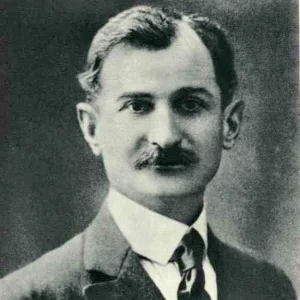
Traian Vuia is one of the most prominent figures in world aviation, recognized as the first man to fly a self-propelled aircraft heavier than air, without the aid of a catapult or other external launch devices. Through his determination, inventiveness, and courage, Vuia laid the foundations of modern aviation, paving the way for the development of aircraft and human flight. His innovative work and achievements in engineering and aviation had a profound impact on the technological and scientific evolution of the 20th century.
Traian Vuia lived and created during a period of great technical and scientific change at the beginning of the 20th century, when humanity’s dream of flying was beginning to become a reality. It was a time of excitement in the field of inventions and technological experiments, marked by the efforts of aviation pioneers such as the Wright brothers, Alberto Santos-Dumont, and Otto Lilienthal.
During this period, the idea of achieving controlled flight with a machine heavier than air still seemed like a distant dream for many. However, pioneers such as Traian Vuia refused to accept the technological limitations of the time and worked tirelessly to turn this dream into reality. Vuia, a Romanian with a boundless passion for aviation, was one of those who managed to overcome the challenges and contribute significantly to the development of aviation.
Traian Vuia was born on August 17, 1872, in the village of Surducul Mic (now Traian Vuia), Timiș County, into a family of peasants. Although he came from a rural background, Vuia showed an early interest in science and technology, being fascinated by mechanics and the idea of flight.
He began his studies at the school in his native village, continuing them at the high school in Lugoj. He later attended the Polytechnic University of Budapest, where he studied mechanical engineering, but for financial reasons he was forced to give up his studies. However, Vuia did not give up on his dream and continued to study and experiment on his own, combining his passion for mechanics with his desire to develop a functional flying machine.
In 1902, Vuia moved to Paris, where he began working intensively on his airplane project. Despite numerous financial and technical difficulties, Vuia continued to develop his ideas and perfect his invention, obtaining a patent in 1903 for the “aeroplane-automobile,” an innovative flying machine that combined a land vehicle with a flying machine.
Traian Vuia had an impressive career as an inventor and aviation pioneer, marked by significant achievements that had a lasting impact on the development of global aviation. Among his most important contributions are:
Traian Vuia’s thinking and work were characterized by a tireless passion for science and innovation, as well as a deep commitment to technological progress. He was a pioneer in the true sense of the word, refusing to accept the limitations imposed by the technology of the time and working tirelessly to turn his dreams into reality.
Vuia was also a proponent of international collaboration in science and technology, recognizing the importance of exchanging ideas and knowledge for the advancement of humanity. Although he did not leave behind a vast body of written work, his inventions and achievements are a testament to his inventive genius and his remarkable contributions to the development of aviation and technology.
Traian Vuia, a pioneer of aviation, was initiated into Freemasonry in France, in the Ernest Renan Lodge, together with Alexandru Vaida-Voevod and the other members of the Romanian delegation to the Paris Peace Conference in 1919. Vuia was an active Freemason and supported the Masonic values of innovation and technological progress. Freemasonry provided him with support and networks that helped him in his technical achievements and in promoting aviation as a pioneering field.
Traian Vuia died on September 3, 1950, at the age of 77, leaving behind a legacy of pioneering and innovation that had a profound impact on aviation and technological progress. His contributions to the development of modern aviation are widely recognized, and his name is honored by numerous monuments, streets, and institutions that bear his name.
Vuia is remembered as one of the pioneers of global aviation, and his achievements are celebrated in Romania and around the world. His legacy also keeps inspiring new generations of engineers, inventors, and aviators, who see Vuia as an example of courage, determination, and innovation.
Traian Vuia remains a central figure in the history of aviation and technological progress, a visionary inventor who paved the way for the development of aircraft and human flight. Through his innovative work and remarkable achievements, Vuia laid the foundations of modern aviation and became a symbol of inventive spirit and commitment to science. His technological and intellectual legacy remains invaluable, and his impact on the evolution of aviation and technology is lasting and significant.
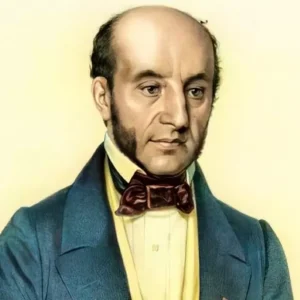
Petrache Poenaru is recognized as one of the most important Romanian inventors and educators of the 19th century, being particularly famous for his invention of the portable fountain pen, known today as the ballpoint pen. In addition to his work as an inventor, Poenaru was a fervent promoter of modern education in Romania, contributing significantly to the development of education and the formation of a Romanian intellectual elite. Throughout his life, Poenaru combined his passion for technical innovation with his desire to contribute to Romania’s educational and cultural progress, leaving behind a valuable legacy for the Romanian nation.
Petrache Poenaru lived during a period of great change in the Romanian Principalities, marked by the beginnings of the modernization of the Romanian state and efforts toward national emancipation. At the beginning of the 19th century, Wallachia and Moldavia were still under the suzerainty of the Ottoman Empire, but had begun to consolidate their national identity and aspire to independence and modernization.
This period was characterised by the development of education, science and culture, in a context in which the Romanian elites were beginning to play an increasingly active role in shaping the nation’s future. In this context, Petrache Poenaru became a symbol of technical innovation and commitment to education, contributing to the formation of a new generation of intellectuals and the promotion of modern values in Romanian society.
Petrache Poenaru was born on January 10, 1799, in the village of Benești, Vâlcea County, into a family of minor boyars. From an early age, Poenaru showed a keen interest in study and science, and his family encouraged him to continue his education. He attended school in Craiova and then studied at the Royal Academy of Saint Sava in Bucharest, where he came into contact with Enlightenment ideas and the cultural figures of the time.
In 1826, the young Poenaru left for Paris to continue his studies, where he attended courses at the École Polytechnique and the École des Ponts et Chaussées. During his time in France, Poenaru was influenced by the great achievements of French engineering and science and began to develop his own innovative ideas. Here, he witnessed the 1830 Uprising, an event that strengthened his liberal convictions and his desire to contribute to the modernization of Romania.
Petrache Poenaru had an impressive career, marked by a series of remarkable achievements that had a lasting impact on the development of science, technology, and education in Romania. Among his most important contributions are:
Petrache Poenaru’s thinking was deeply influenced by Enlightenment values and a desire to contribute to Romania’s modernization. He was a supporter of education, science, and innovation, believing that these were fundamental to the progress of a nation. Poenaru promoted the idea that Romania’s economic and social development depended on educating the population and adopting modern technologies.
In his writings, Poenaru addressed topics such as the organization of education, the modernization of agriculture, and infrastructure development. His works include articles published in various magazines and newspapers of the time, as well as studies on agriculture, education, and engineering. Poenaru was also a supporter of national values and advocated for the preservation of Romanian cultural identity in a changing European context.
Petrache Poenaru was initiated into Freemasonry during his studies in France. He was an active Freemason and used his influence in the lodge to promote education and social progress in Romania, contributing to the development of the educational system and the modernization of the country. I.T. Ulic mentions in his 1932 work “The History of Freemasonry” that in 1856 he was elected Worshipful Master of a Bucharest Lodge.
Petrache Poenaru died on October 2, 1875, at the age of 76, leaving behind a valuable legacy for Romanian science, education, and culture. His contributions to the development of modern education, technical innovation, and the promotion of national values had a profound impact on Romania’s evolution and are recognized as essential to the formation of the modern Romanian state.
His legacy is honored by numerous educational institutions, streets, and monuments bearing his name. His invention, the fountain pen, remains one of the most widely used and appreciated innovations in the world, symbolizing the importance of education and written communication. Petrache Poenaru is commemorated as a pioneer of modern education and a genius inventor, and he remains one of the most important figures in the history of Romanian science and culture.
Petrache Poenaru remains a central figure in Romanian history, an inventor, educator, and engineer who made a decisive contribution to the development of education, science, and technology in our country. Through his innovative work and commitment to education, Poenaru laid the foundations for Romania’s modernization and became a symbol of progress and creativity. His intellectual and technical legacy remains invaluable, and his impact on Romania’s evolution is lasting and significant.
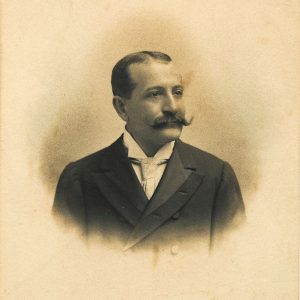
Take Ionescu, one of Romania’s most influential political figures of the late 19th and early 20th centuries, is recognized for his crucial role in Romanian diplomacy and in building a coherent and pragmatic foreign policy for modern Romania. As a politician, diplomat, and lawyer, Take Ionescu was a visionary who contributed significantly to strengthening Romania’s international position and promoting national interests in the complex context of European politics during the interwar period.
Take Ionescu lived and worked during a period of great turmoil and transformation in Europe and Romania, marked by the rise of nationalism, the collapse of empires, and the establishment of a new balance of power on the continent. In the second half of the 19th century and early 20th century, Romania was in the midst of modernization, with strong aspirations to consolidate its independence and become an important player on the international stage.
This period was marked by major challenges for Romania, including maintaining independence in the face of the great powers, resolving territorial and national issues, and integrating into emerging European structures. In this context, Take Ionescu became one of the main architects of Romanian foreign policy, contributing to the formulation of a diplomatic strategy that would protect and promote Romania’s national interests.
Take Ionescu was born on October 13, 1858, in Ploiești, into a family of modest means. His father, Ioan Ionescu, was a mathematics teacher, and his mother, Elena, came from a family of merchants. From an early age, Take Ionescu showed brilliant intelligence and a passion for learning, being a brilliant student.
After graduating from primary and secondary school in Ploiești, Take Ionescu attended the “Sfântul Sava” High School in Bucharest, where he achieved remarkable results. At the age of 18, he left for Paris to continue his studies at the Faculty of Law of the University of Paris. Here, Ionescu obtained his doctorate in law with a thesis on “The Origin of Property Rights,” becoming one of the youngest doctors of law in Europe.
His education in Paris gave him a broad perspective on the world and contributed to the formation of a liberal and democratic political vision. During his studies, Take Ionescu came into contact with prominent figures in European political and intellectual life, who profoundly influenced his thinking and inspired him to contribute to the modernization of Romania.
Take Ionescu had an impressive political and diplomatic career, marked by remarkable achievements that had a lasting impact on the development of modern Romania. Among his most important contributions are:
Take Ionescu’s political thinking was characterised by a deep commitment to liberal and democratic values, which he promoted both in his political and diplomatic work. He strongly believed in the need to modernize Romania and integrate it into the European community, considering that only through reforms and an active and coherent foreign policy could Romania achieve prosperity and stability.
Take Ionescu was a supporter of civil rights and freedoms, advocating for responsible governance and respect for the rule of law. In his political and diplomatic work, he emphasized the need for a balance between state powers and the importance of a pragmatic foreign policy that would protect Romania’s national interests in a complex and often hostile international context.
Ionescu was also an advocate of education and culture, believing them to be essential for the development of a modern nation. As Minister of Public Instruction, he promoted the expansion of access to education and supported the development of national culture.
His fundamental works include articles and studies published in various political and legal journals, as well as his political speeches, which reflect his concerns for the modernization of the Romanian state and the promotion of national interests in foreign policy.
Although the date and place of his initiation are unknown, it is known that Take Ionescu was initiated into Freemasonry in the lodges of Bucharest, where he played an active role in promoting the Masonic values of justice and democracy. Freemasonry influenced his political career, as Ionescu was a supporter of social and political reforms in Romania.
Take Ionescu died on June 21, 1922, at the age of 63, leaving behind a political and diplomatic legacy of inestimable value. His contributions to the development of Romanian foreign policy and the consolidation of Romania’s international position had a profound impact on the country’s evolution during the interwar period and are recognized as essential to the creation of Greater Romania.
His legacy is honored by numerous educational institutions, streets, and monuments bearing his name. His works continue to be studied and appreciated by historians and political scientists, being recognized as fundamental works for understanding Romanian politics during the interwar period.
Take Ionescu is considered one of the greatest diplomats and politicians in Romanian history, a visionary who contributed decisively to the construction of a modern and independent Romania. He remains one of the most important figures in Romanian political history, and his legacy continues to inspire generations of politicians and diplomats.
Take Ionescu remains a central figure in Romanian history, a visionary diplomat and politician who contributed decisively to the consolidation of the modern Romanian state and the promotion of national interests on the international stage. Through his political and diplomatic work, Ionescu laid the foundations for a coherent and pragmatic foreign policy that protected and promoted Romania’s interests during a period of great turmoil and transformation. His political and diplomatic legacy remains invaluable, and his impact on Romania’s development is lasting and significant.
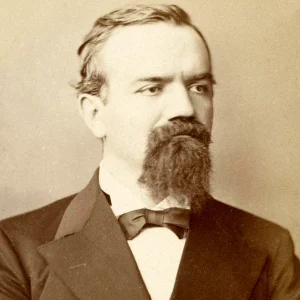
Titu Maiorescu, one of the most prominent figures in Romanian culture, played an essential role in Romania’s intellectual and cultural development in the second half of the 19th century. A philosopher, literary critic, politician, and educator, Maiorescu profoundly influenced Romanian thought through his ideas and his work both within the Junimea literary society and in the political sphere. In this article, we will explore his life, career, and cultural legacy, as well as his connections to Freemasonry.
Titu Maiorescu was born on February 15, 1840, in Craiova, into a family of intellectuals. His father, Ioan Maiorescu, was a respected teacher and a supporter of Enlightenment ideas, and his mother, Maria Popazu, came from a family of priests. This solid, knowledge-oriented education was the foundation on which Titu built his entire career. He studied at prestigious universities in Vienna, Berlin, and Paris, where he was influenced by the philosophical ideas of Kant and Hegel, as well as by the cultural and scientific trends of the time.
After completing his studies, Maiorescu returned to Romania, where he held various academic positions and contributed to the founding of institutions that were essential to Romanian culture. He was a professor of philosophy at the University of Iași and later at the University of Bucharest. As an educator, he supported the introduction of modern teaching methods and promoted education as a central pillar of national development.
One of Titu Maiorescu’s most significant contributions to Romanian culture was his involvement in founding and leading the Junimea cultural society, established in 1863 in Iași. Junimea was a center for debate and literary creation, with the aim of promoting authentic literature and rigorous literary criticism. Under Maiorescu’s influence, Junimea became a platform for young writers and intellectuals, including Mihai Eminescu, Ion Creangă, and I.L. Caragiale.
Maiorescu is known for his theory of “forms without substance,” through which he criticized the superficial adoption of Western models without adapting them to national specifics. He advocated for the creation of an authentic Romanian culture that would combine national traditions with universal values.
As a literary critic, Maiorescu had a decisive influence on the direction of Romanian literature. Through his articles and studies published in the magazine Convorbiri Literare, Maiorescu formulated aesthetic and critical principles that contributed to the shaping of a national literary canon.
In addition to his cultural activities, Titu Maiorescu also had a remarkable political career. He was a member of the Conservative Party and held important positions in the government, including that of Minister of Religious Affairs and Public Instruction. In this capacity, he promoted educational reforms that had a significant impact on the Romanian education system.
Maiorescu was also a supporter of a cultural policy that encouraged the intellectual and moral development of the nation. He contributed to the creation of the Romanian Academy and was one of its first members, actively participating in the development of fundamental works for Romanian culture.
A lesser-known aspect of Titu Maiorescu’s life is his membership in Freemasonry. Like many of his Junimist colleagues, Maiorescu was initiated into the Steaua României Lodge in Iași on November 26, 1866. The lodge, founded on August 18 of the same year and presided over by George Suțu, was a meeting place for the intellectual and political elites of the time. After only a few months, on February 11, 1867, Maiorescu was promoted to the ranks of Companion and Master within the same lodge.
This membership in Freemasonry was not merely a formal affiliation, but reflected Maiorescu’s commitment to Enlightenment values and to the idea of cultural and moral progress. Freemasonry provided a framework in which Maiorescu and his brothers could discuss and promote ideas related to national development and the modernization of Romanian society.
Titu Maiorescu died on June 18, 1917, leaving behind a cultural and intellectual legacy of inestimable importance. His contributions to Romanian literature, philosophy, and politics had a profound impact on subsequent generations. Maiorescu remains a symbol of intellectual commitment and dedication to Romania’s cultural progress.
Today, Titu Maiorescu is recognized as one of Romania’s greatest thinkers, and his ideas and works continue to be studied and appreciated. He was a true mentor to many of those who contributed to defining the cultural identity of modern Romania.
In conclusion, Titu Maiorescu was not only a man of culture, but also a visionary who understood the importance of education and culture in the development of a nation. Through his work within Junimea, his critical contributions, and his political involvement, Maiorescu shaped Romania’s cultural destiny and left a lasting mark on our history.
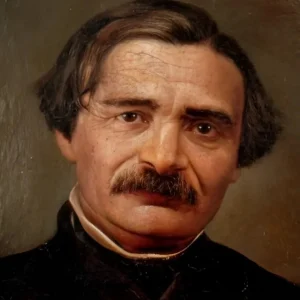
Introduction
Ion Heliade-Rădulescu is one of the most emblematic figures of 19th-century Romanian culture, recognized as the founder of modern Romanian literature, the initiator of the Romanian press, and a pioneer of Romanian linguistics. A man of culture, writer, teacher, and politician, Heliade-Rădulescu played a crucial role in the development of national consciousness and in promoting Romanian as a literary language. Through his diverse activities and his commitment to the modernization of Romanian society, Heliade-Rădulescu left behind an invaluable cultural and intellectual legacy.
Ion Heliade-Rădulescu lived during a period of great political and social change in the Romanian Principalities, marked by the rise of national movements and the beginnings of the modernization of the Romanian state. In the first half of the 19th century, Wallachia and Moldavia were under the suzerainty of the Ottoman Empire, but had begun to define their national identity and aspire to independence and union.
Heliade-Rădulescu’s period was one of cultural and political effervescence, in which the Romanian elites sought to create a framework for the development of a modern nation. These efforts manifested themselves in multiple fields, from literature and education to politics and journalism. In this context, Heliade-Rădulescu established himself as an intellectual leader and promoter of reforms that would lay the foundations for the modern Romanian state.
Ion Heliade-Rădulescu was born on January 6, 1802, in Târgoviște, into a family of minor boyars. His father, Ilie Rădulescu, was a minor civil servant, and his mother, Eufrosina Danielopol, came from a family of Greek origin. From an early age, Heliade-Rădulescu showed a keen interest in literature and learning, being educated in the spirit of classical and Enlightenment values.
He began his studies at the Greek school in Bucharest, and later studied at the Royal Academy of Saint Sava, where he had the opportunity to come into contact with Enlightenment ideas and European culture. His teachers, including Gheorghe Lazăr, instilled in him a love for the Romanian language and classical literature, profoundly influencing his intellectual development.
After completing his studies, Heliade-Rădulescu began a teaching career, becoming a teacher at the school where he had been a student. He also began to publish his first literary and philological works, which quickly established him as one of the most important intellectuals of the time.
Ion Heliade-Rădulescu had a long and diverse career, marked by significant contributions in many fields, from literature and linguistics to journalism and politics. Among his most important achievements are:
Ion Heliade-Rădulescu’s thinking was influenced by Enlightenment values and the desire to contribute to the emancipation of the Romanian nation. He was a proponent of rationalism and education, believing that only through culture and knowledge could Romanians achieve freedom and prosperity. Heliade-Rădulescu promoted the idea that language and literature are fundamental to national identity, and that education is the key to the development of a modern society.
Among his fundamental works are “Romanian Grammar,” an essential work for the development of Romanian linguistics, and “Zburătorul,” one of the first masterpieces of modern Romanian literature. In “Elements of Romanian Language,” Heliade-Rădulescu laid the foundations for modern Romanian orthography, establishing rules that were later adopted by the Romanian Academy.
His political thinking was marked by the ideals of liberty, equality, and fraternity, which he promoted both in his journalistic and political work. Heliade-Rădulescu was a supporter of democratic reforms and the union of the Romanian Principalities, considering them essential for building a strong and modern nation state.
Ion Heliade-Rădulescu was initiated into Freemasonry in Bucharest and was an active member of the “Frăția” society, contributing to the Revolution of 1848. In 1857, he was one of the founding members of the “Steaua Dunării” Lodge in Bucharest. Freemasonry influenced his thinking and political activity, with Heliade-Rădulescu promoting the values of liberty, equality, and fraternity in his writings and actions.
Ion Heliade-Rădulescu died on April 27, 1872, at the age of 70, leaving behind a cultural and intellectual legacy of inestimable value. His contributions to the development of Romanian literature, linguistics, and journalism had a profound impact on Romanian culture and inspired generations of writers, linguists, and journalists.
His legacy is honored by numerous educational institutions, streets, and monuments bearing his name. His works continue to be studied in schools and universities, being recognized as fundamental works of Romanian culture. Heliade-Rădulescu is considered one of the founders of modern Romanian literature and one of the pioneers of the Romanian press, and he remains one of the most important figures in the history of Romanian culture.
Ion Heliade-Rădulescu remains one of the most influential figures in Romanian culture, a true pioneer who laid the foundations for modern Romanian literature, linguistics, and journalism. Through his diverse activities and his commitment to education, culture, and freedom, Heliade-Rădulescu made a decisive contribution to the development of national consciousness and the modernization of Romanian society. His cultural and intellectual legacy remains invaluable, and his impact on Romania’s cultural evolution is lasting and significant.
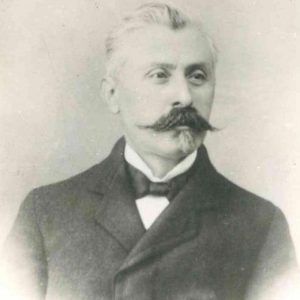
Spiru Haret, one of Romania’s most remarkable figures of the late 19th and early 20th centuries, is recognized as the father of modern education in Romania. A mathematician, sociologist, and politician, Haret revolutionized the Romanian educational system through reforms that had a lasting impact on the country’s cultural and social development. Through his progressive vision and commitment to education, Spiru Haret made a decisive contribution to the formation of a modern and educated society capable of supporting the development of the Romanian nation state.
Spiru Haret lived during a period of great change in Romania, marked by the transition from a predominantly agrarian state to an industrialized and modern one. In the second half of the 19th century and early 20th century, Romania faced major economic and social challenges, and education was considered a key element for the country’s progress and modernization.
After gaining independence in 1877 and proclaiming the Kingdom of Romania in 1881, the country’s political and intellectual elites began to attach particular importance to the development of a national education system capable of producing educated and competent citizens. In this context, Spiru Haret, with his solid background in mathematics and exact sciences, but also with a deep understanding of social needs, became the main architect of the educational reforms that would fundamentally transform the Romanian education system.
Spiru Haret was born on February 15, 1851, in Iași, into a modest family. His father, Pavel Haret, was a minor civil servant, and his mother, Smaranda, came from a family of peasants. Although they did not have abundant financial resources, the family managed to provide Spiru Haret with a solid education, recognizing his talent and desire to learn.
After graduating from high school, Spiru Haret was admitted to the Faculty of Sciences at the University of Bucharest, where he studied mathematics and physics. He was an exceptional student, obtaining a scholarship in 1875 that allowed him to continue his studies in Paris at the prestigious École Normale Supérieure. Here, Haret consolidated his knowledge of mathematics and exact sciences, obtaining a doctorate in mathematics in 1878 with a thesis on the invariance of the major axes of planets, a work that was very well received by the international scientific community.
Upon returning to Romania, Haret devoted his life to reforming the educational system and modernizing Romanian society. He was a university professor, minister of education, and an influential intellectual leader, contributing to the development of a culture of education and the formation of a generation of dedicated teachers and intellectuals.
Spiru Haret had an impressive career, marked by a series of remarkable achievements that had a lasting impact on the Romanian education system. Among his most important contributions are:
Spiru Haret’s thinking was marked by a deep commitment to education and a progressive vision of social development. He strongly believed that education was the key to individual and national development, considering that a well-organized educational system accessible to all citizens was essential for the progress of a nation.
Haret was influenced by Enlightenment ideas and European educational movements of the time, but adapted these ideas to the specific characteristics and needs of Romanian society. He was a promoter of comprehensive education, which aims at the harmonious development of the individual from an intellectual, moral, and physical point of view.
One of his fundamental works is “School Reforms” (1898), in which Haret details his vision for the organization of education and proposes a series of concrete measures for its improvement. This work was a veritable manifesto for the modernization of education in Romania and formed the basis for the educational policies promoted by Haret during his terms as minister.
In addition to his pedagogical writings, Haret also published scientific works in the fields of mathematics and astronomy, as well as sociological studies on Romanian villages. These works reflect his interest in science and his deep understanding of the social and economic realities of Romania.
Spiru Haret was initiated into Freemasonry during his studies in France. Haret was an active Freemason, and Masonic principles of education and social progress profoundly influenced the reforms he implemented in Romanian education. His Masonic activity was reflected in his commitment to modernizing the educational system in Romania.
Spiru Haret died on December 17, 1912, at the age of 61, leaving behind an impressive legacy that continues to be honored and respected in Romania. Thanks to his efforts, the Romanian education system was modernized and expanded, and access to education became a reality for an increasing number of children and young people.
His legacy is commemorated by numerous educational institutions, streets, and monuments bearing his name. The Spiru Haret University in Bucharest, founded in his honor, is one of the largest institutions of higher education in Romania, continuing the tradition of excellence in education that Haret promoted.
Furthermore, his contributions to the development of Romanian pedagogy and sociology are studied and appreciated by researchers and specialists in the field, and his educational reforms are considered fundamental to the evolution of Romanian education.
Haret is recognized as one of the most important reformers in Romanian history and a model of dedication to education and science. He is revered as a symbol of progress and commitment to the public good, and his legacy continues to inspire generations of educators and leaders in the field of education.
Spiru Haret remains a central figure in Romanian history, a visionary reformer who laid the foundations for modern education in the country. Through his reforms and his tireless commitment to education, Haret made a decisive contribution to the formation of a modern and educated society capable of supporting the development and progress of the Romanian nation. His legacy is one of excellence and dedication, and his impact on the Romanian educational system remains lasting and significant.
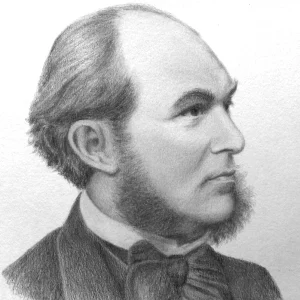
Carol Davila, physician and reformer of the Romanian medical system, is one of the most influential figures in the history of medicine in Romania. Of French origin, Davila laid the foundations of modern medicine in Romania, contributing to the development of the healthcare system, the establishment of essential medical institutions, and the education of a generation of doctors who carried on his legacy. His work, carried out over more than three decades, left a lasting mark on the Romanian medical system and contributed to saving thousands of lives.
Carol Davila lived and worked during a period of major transformations in Romanian history, marked by efforts to modernize and consolidate the Romanian state. In the second half of the 19th century, Romania, under the reign of Alexandru Ioan Cuza and later King Carol I, underwent a comprehensive process of social, economic, and political reforms aimed at modernizing state structures and creating a framework conducive to the development of the nation.
In this context, developing an efficient public health system became a priority. In the mid-19th century, sanitary conditions in Romania were extremely poor, with high rates of infant mortality and infectious diseases. In this environment, Carol Davila came to Romania with the mission of reforming and modernizing medicine, bringing with him the experience and knowledge he had acquired in France, one of the most advanced countries in the medical field at the time.
Carol Davila was born on April 8, 1828, in Parma, Italy, into a family of French origin. Although little is known about his early life, it is known that he studied medicine in France at the Paris School of Medicine, one of the most prestigious medical educational institutions in Europe. There, Davila was influenced by the great figures of French medicine, such as Claude Bernard and Jean-Martin Charcot, who instilled in him a passion for research and the application of scientific methods in practice.
After graduating, Davila worked for a period in hospitals in Paris, where he perfected his medical knowledge and gained practical experience in treating infectious diseases and in modern surgery. In 1853, at the invitation of the Romanian government, he came to Romania, where he was appointed head of the Army Medical Service and professor at the National School of Medicine and Pharmacy in Bucharest.
Carol Davila’s work in Romania was extensive and diverse, including fundamental reforms in medical education, the establishment of new medical institutions, and the promotion of public health. Among his major achievements are:
His reforms radically transformed the Romanian healthcare system, laying the foundations for a modern network of medical institutions and ensuring the professional training of a new generation of doctors. Thanks to his efforts, the overall level of public health in Romania improved significantly, and mortality from infectious diseases was reduced considerably.
Carol Davila was a scientist and reformer deeply influenced by Enlightenment values and the desire to apply scientific knowledge for the good of society. His thinking was marked by the conviction that medicine is not only the art of healing diseases, but also a science that must be based on research and rigorous education.
Davila promoted the idea that medicine should be accessible to all and that the state has a responsibility to ensure an efficient and well-organized public health system. To this end, he advocated for the establishment of public hospitals, health education for the population, and disease prevention through hygiene and vaccination measures.
O altă componentă importantă a gândirii lui Davila a fost angajamentul său față de educație. El a considerat că formarea profesională a medicilor trebuie să fie bazată pe standarde înalte de pregătire teoretică și practică și a promovat un curriculum medical care includea cele mai recente descoperiri științifice și metode moderne de tratament.
In his writings, Davila addressed various medical topics, from the organization of the healthcare system to the treatment of infectious diseases. His work reflects a constant concern for improving public health and adapting medical practices to the specific needs of the Romanian population.
Carol Davila was initiated into Freemasonry on June 4, 1874, in the “Wise Men of Heliopolis” Lodge in Bucharest. Shortly after his initiation, he was elected Worshipful Master of the lodge. On September 14, 1874, he was the lodge’s delegate to the General Assembly of Worshipful Masters of Lodges of the Grand Orient of France. Davila played an important role in organizing and representing Romanian Masonic lodges at the international level, being the first Pro Grand Master of the Grand Orient of Romania for nine years, starting in 1879.
Carol Davila died on August 24, 1884, at the age of 56, leaving behind an extraordinary legacy that continues to be honored and appreciated to this day. Thanks to his efforts, Romanian medicine took a significant leap towards modernity, and the institutions he founded and reformed continue to play an essential role in Romania’s healthcare system.
His legacy is recognized through numerous monuments, streets, and institutions bearing his name, including the Carol Davila University of Medicine and Pharmacy in Bucharest, one of the most prestigious institutions of higher education in Romania. Similarly, the Central Military Hospital in Bucharest continues to be one of the most important medical centers in the country, operating on the principles and reforms introduced by Davila.
Davila is commemorated annually within the Romanian medical community, and his contributions are studied and appreciated as fundamental to the development of medicine in Romania. He is revered as a symbol of devotion to science and the public good, and his legacy remains a source of inspiration for Romanian doctors and researchers.
Carol Davila remains one of the most important figures in the history of Romanian medicine, a reformer and innovator who laid the foundations for the modern medical system in Romania. Through his tireless work, Davila contributed to saving thousands of lives and improving the quality of life for generations of Romanians. His legacy continues to inspire and guide the development of medicine in Romania, serving as a model of excellence and dedication for professionals in the medical field.
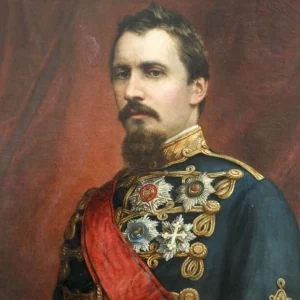
Alexandru Ioan Cuza, one of the most emblematic figures in Romanian history, was the ruler who laid the foundations of the modern Romanian state by uniting Moldavia and Wallachia in 1859. Cuza was a visionary reformer whose term in office was marked by essential transformations in the social, economic, and political spheres. His reforms had a lasting impact on Romania’s evolution, paving the way for democratic development and the creation of a united and modern nation state.
Alexandru Ioan Cuza lived during a period of great political and social turmoil in Europe, marked by national movements aimed at unifying and liberating peoples under foreign rule. In the first half of the 19th century, the Romanian Principalities were subject to a double influence: Ottoman domination, which imposed tribute and suzerainty, and the Russian protectorate, which exercised considerable influence over domestic politics.
In this context, the idea of uniting Moldavia and Wallachia began to gain ground, supported by the intellectual and political elite of the time. Unification was seen as a solution to strengthen Romanian resistance against foreign influences and to create a state strong and united enough to aspire to independence. This idea was strongly influenced by the Revolution of 1848, which spread the ideals of freedom, equality, and nationalism throughout Europe.
In this complex and tense context, Alexandru Ioan Cuza was elected ruler of Moldavia and Wallachia, marking the beginning of an irreversible process of unification and modernization of Romania.
Alexandru Ioan Cuza was born on March 20, 1820, in the town of Bârlad, into a family of Moldavian boyars. His father, Ioan Cuza, was a boyar with a respectable social position, and his mother, Sultana Cuza, came from a noble family of Greek origin. From an early age, Alexandru Ioan Cuza received a select education, studying in Iași and Paris, where he acquired a solid background in law, political science, and history.
His studies in France exposed him to the liberal and nationalist ideas circulating in Europe, profoundly influencing his political and social thinking. During his studies, Cuza came into contact with important figures of the time, who inspired him to become a fervent supporter of reforms and national unification.
Upon his return to Moldova, Cuza entered public life, serving in various administrative and military positions. He was involved in the 1848 revolution and, although the revolution was defeated, he continued to campaign for the ideals of union and reform. In 1857, he was elected deputy to the Ad Hoc Divan of Moldova, where he played a crucial role in preparing the ground for the union of the two principalities.
The defining moment of Alexandru Ioan Cuza’s career was his election as ruler of Moldavia on January 5, 1859, followed shortly thereafter by his election as ruler of Wallachia on January 24, 1859. This double election, achieved through an ingenious political maneuver by the Romanian political elite, represented an act of national will that led to the de facto union of the two principalities, thus marking the birth of the modern Romanian state.
As ruler of the United Principalities, Cuza initiated a comprehensive program of reforms aimed at modernizing the state and improving the living conditions of the population. Among his most important reforms were:
However, his reforms, although necessary and revolutionary, sparked discontent among the boyars and the Church, who feared the loss of their privileges. Cuza’s authoritarianism and attempts to centralize power also created political tensions that culminated in the “monstrous coalition” of 1866, an alliance between conservatives and moderate liberals that forced Cuza to abdicate on February 11, 1866.
Alexandru Ioan Cuza was a political leader and pragmatic thinker, influenced by the Enlightenment and liberal ideas that dominated Europe at that time. He strongly believed in the need to modernize the Romanian state through reforms that would ensure Romania’s social, economic, and political progress. His political thinking was marked by the ideal of national unification, which he considered essential for consolidating the Romanian state and ensuring its independence.
Cuza was also a proponent of centralizing power and strengthening state authority, believing that a strong government was necessary to implement reforms and protect national interests. This vision was reflected in his administrative and legal reforms, which aimed to create an efficient and modern state.
In the field of education, Cuza was a promoter of universal access to education, considering it essential for the development of a democratic society and the formation of a strong national consciousness. The founding of the University of Bucharest and the expansion of primary education are testimonies to his commitment to education and culture.
His thinking was also marked by a strong social sensitivity, evident in his agrarian reform and policies for granting land ownership to peasants. Cuza understood the importance of social justice for the stability and development of the state, promoting measures to reduce inequalities and improve the living conditions of the most vulnerable members of society.
Alexandru Ioan Cuza was initiated into Freemasonry, most likely during his studies abroad, although the exact details are unknown. Cuza was influenced by Masonic principles in organizing the new Romanian state, and some sources indicate that he applied these principles in his governance. In 1865, after the Freemasons conspired against him, Cuza banned the operation of the “Steaua Dunării” Lodge in Bucharest. Present at Cuza’s funeral, his brother Mihail Kogălniceanu stated: “He held the key to the Orient, and nothing was done in the Orient without his knowledge, let alone without his will.” Cuza’s successors were very careful to honor his personality. Thus, in 1875, the lights of the Alexandru Ioan I Lodge in Bucharest were lit, and seven years later, those of the Cuza Vodă Lodge in Dorohoi.
After his abdication, Alexandru Ioan Cuza went into exile, where he lived until his death on May 15, 1873, in Heidelberg, Germany. Although he was forced to abdicate, his legacy remains one of the most enduring and influential in Romanian history. His reforms laid the foundations for the modern development of the Romanian state and paved the way for the proclamation of the Kingdom of Romania in 1881.
Cuza is commemorated throughout Romania with monuments, streets, educational institutions, and other places bearing his name. January 24, the date of the union of the Principalities, is celebrated annually as Union Day, a moment of reflection on his contribution to the creation of the modern Romanian state.
In modern times, Alexandru Ioan Cuza is revered as a symbol of national unification and democratic reforms. His legacy continues to inspire generations of Romanians, being studied and appreciated for its fundamental importance in Romanian history.
Alexandru Ioan Cuza remains a central figure in Romanian history, a reformist ruler who profoundly transformed Romanian society and laid the foundations for the modern Romanian state. Through the union of Moldavia and Wallachia and his bold reforms, Cuza made a decisive contribution to the formation of a strong and united nation, paving the way for democratic development and the achievement of Romania’s full independence.
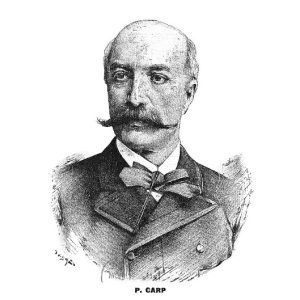
Petre P. Carp, one of the most important Romanian political and intellectual leaders of the late 19th and early 20th centuries, played a central role in the development of modern Romania, both domestically and internationally. As leader of the Conservative Party, Carp was a promoter of moderate reforms, political stability, and a pragmatic foreign policy aimed at strengthening the independence and security of the Romanian state. His figure is closely linked to Romania’s transition to modernity and efforts to place the country in an influential position in Southeast Europe.
Petre P. Carp lived during a crucial period in Romanian history, marked by major political and economic transformations in the second half of the 19th century and the beginning of the 20th century. After gaining independence in 1877, Romania underwent a series of reforms aimed at consolidating the national state and modernizing its institutions. In this context, the Conservative Party, of which Carp was a member, played an essential role in ensuring political continuity and stability, sometimes counterbalancing the radical tendencies promoted by the liberals.
The period during which Carp was active in politics was also marked by intense diplomatic activity, aimed at securing Romania’s position in the complex and often fragile international balance of power in Europe. The period was also marked by major conflicts and rivalries between the great European powers, which forced Romania to carefully define its alliances and foreign policy strategies.
Petre P. Carp was born on June 29, 1837, in Iași, into a boyar family with political traditions. His father, Petrache Carp, was a well-known boyar and politician, and his mother, Smaranda Mavrocordat, came from an old aristocratic family. From an early age, Carp was exposed to a refined cultural and intellectual environment, which profoundly influenced his later development.
Carp studied in Berlin, where he studied law and political science, receiving a high-level education influenced by the conservative and moderate liberal ideas that dominated German politics at the time. His studies in Germany gave him a broad perspective on the political and economic systems of Europe and helped him develop a pragmatic view of governance and diplomacy.
After returning to Romania, Carp entered politics and became one of the most influential leaders of the Conservative Party, distinguishing himself through his ability to articulate policies that promoted stability and development in Romania during a period of rapid and sometimes chaotic change.
Petre P. Carp had a long and influential political career, serving twice as Prime Minister of Romania and holding various other leadership positions, including Minister of Foreign Affairs, Minister of Finance, and Minister of the Interior. His political career was marked by his commitment to conservative principles, which emphasized order, continuity, and moderate reforms designed to avoid excesses and instability.
Carp’s first term as prime minister was between 1900 and 1901, a difficult period for Romania marked by economic crises and social tensions. In this context, Carp’s government implemented a series of measures aimed at stabilizing the economy and reforming public administration, while ensuring the continuity of the state.
His second term as prime minister, between 1910 and 1912, was marked by his efforts to modernize the Romanian army and strengthen Romania’s foreign alliances. Carp was a staunch supporter of the alliance with the Central Powers, believing that Germany and Austria-Hungary could offer Romania the best protection against external threats, especially those coming from Russia.
One of Carp’s most important contributions to foreign policy was the negotiation of alliances and treaties that placed Romania in a favorable strategic position in the international context. Although his support for the alliance with the Central Powers was controversial and was not followed by his successors, his pragmatic view of diplomacy profoundly influenced Romania’s foreign policy.
Domestically, Carp was a proponent of moderate reforms, including agrarian reform and the extension of voting rights, but he always believed that changes should be made gradually to avoid destabilizing society. He was also a supporter of infrastructure modernization and economic development, advocating for investment in transportation and industry.
Petre P. Carp’s political thinking was deeply influenced by his German education and his contact with the major conservative schools of thought in Europe. He strongly believed in the importance of stability and order in government, considering that reforms should be carried out with caution and based on the economic and social realities of the country.
Carp was a proponent of pragmatic conservatism, rejecting both the revolutionary radicalism of socialists and radical liberals and the rigidity of some traditional conservative currents. In his writings and speeches, he promoted the idea that the state should be a guarantor of order and progress, but that reforms should be implemented gradually to ensure their sustainability and success.
One of Carp’s most famous statements, “Romania is too fortunate to need mediocre politicians,” reflects his view on the need for competent and well-prepared leadership to ensure the country’s development. This vision underpinned his domestic and foreign policies.
Carp was also a supporter of education and culture, believing that Romania’s progress depended on the intellectual and moral development of its people. As minister, he promoted initiatives to support education and culture, seeing them as essential pillars of a modern and strong state.
Petre P. Carp was initiated into Freemasonry on October 21, 1867, at the “Steaua României” Lodge in Iași. Shortly thereafter, on November 19, 1867, he received the rank of Companion. Carp continued to be an active Freemason, using Masonic networks to support his conservative political initiatives and contribute to the modernization of Romania.
Petre P. Carp died on June 19, 1919, at the age of 82, leaving behind a complex and controversial political legacy. Although he was sometimes criticized for his conservative positions and his support for the alliance with the Central Powers, Carp was recognized as a visionary politician who understood the importance of stability and pragmatism in government.
His legacy is reflected in the continuation of conservative principles in Romanian politics throughout the interwar period and in his influence on Romanian political thought. His contributions to the modernization of Romania and the consolidation of foreign policy have also been recognized and studied by historians and political scientists.
Today, Petre P. Carp’s name is associated with one of the most important periods of transition in Romanian history, and his contributions continue to be appreciated for their impact on the development of the modern Romanian state. He is commemorated through monuments, streets, and institutions bearing his name, and his political and intellectual work remains a source of inspiration for those who study Romanian history and politics.
Petre P. Carp remains one of the key figures in Romanian political history, a visionary conservative who helped define the direction of Romania’s development at crucial moments in its history. Through his pragmatic politics, his commitment to stability and moderate reforms, and his vision of foreign policy, Carp profoundly influenced the course of Romania’s modernization and left a lasting legacy in the country’s history.
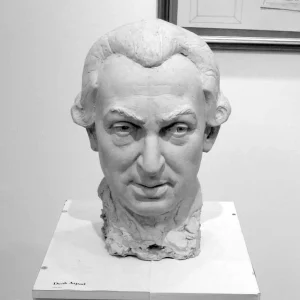
Samuel von Brukenthal is one of the most remarkable figures in Transylvanian history, known for his role as governor and for his cultural and educational legacy. Brukenthal was a prominent Enlightenment figure, a passionate collector, and a patron of the arts, who left behind an invaluable cultural legacy, including the famous Brukenthal Palace and the museum that bears his name, the first public museum in Romania and one of the oldest in Central and Eastern Europe. Through his work, Samuel von Brukenthal contributed significantly to the cultural and political development of Transylvania in the 18th century.
Samuel von Brukenthal lived during a period of great political and social change in Europe, influenced by the Age of Enlightenment and the expansion of Habsburg influence in Central and Eastern Europe. Transylvania, at that time part of the Habsburg Empire, was at the crossroads of Central Europe’s political and cultural interests, being a territory of great strategic and economic importance.
In the 18th century, Transylvania was an autonomous principality under Habsburg suzerainty, with a multicultural society consisting of Romanians, Saxons, Hungarians, and other ethnic minorities. Brukenthal’s era coincided with the reign of Empress Maria Theresa and her son, Joseph II, who promoted policies of centralization and administrative and social reforms within the empire.
In this context, Samuel von Brukenthal, as governor of Transylvania, played an essential role in implementing these reforms, but also in promoting culture and education among the diverse population of the principality. He was a supporter of Enlightenment ideas, which emphasized the importance of reason, education, and culture in the development of society.
Samuel von Brukenthal was born on July 26, 1721, in the town of Nocrich, into a family of Transylvanian Saxons of noble origin. The Brukenthal family was well integrated into the social and political elite of Transylvania, and young Samuel received a select education, which included studies at the University of Halle, one of the most important educational institutions in Germany at the time.
In Halle, Brukenthal studied law and philosophy, but he was also interested in science, art, and theology, influenced by the Enlightenment spirit of the time. After completing his studies, he entered the service of the Habsburg administration, where he quickly demonstrated remarkable abilities, becoming a close associate of Empress Maria Theresa.
His career in the imperial administration culminated in his appointment as governor of Transylvania in 1777, a position he held until 1787. In this position, Brukenthal had the opportunity to put into practice the ideas and principles he had learned during his education, profoundly influencing the cultural and administrative life of Transylvania.
Samuel von Brukenthal began his career in the Habsburg administration, being appointed to various important positions within the state apparatus. Thanks to his skills, he became an advisor to the Imperial Court in Vienna and was later appointed governor of Transylvania.
As governor, Brukenthal was a fervent supporter of the administrative and economic reforms promoted by Maria Theresa and Joseph II. His achievements include strengthening state institutions, modernizing the tax system, and promoting a more equitable justice system. Brukenthal also supported the development of education and culture in Transylvania, being a patron of learning and the sciences.
Brukenthal’s most notable contribution to Transylvanian culture is undoubtedly his impressive art and library collection. A passionate collector, Brukenthal amassed a vast collection of paintings, rare books, manuscripts, and art objects throughout his life, which he exhibited in his palace in Sibiu. In 1817, a few years after his death, the Brukenthal Palace was turned into a public museum, becoming the first museum open to the public in Romania and one of the oldest in Europe.
In addition to his cultural activities, Brukenthal played an important role in the political and administrative life of Transylvania. He promoted ideas of religious tolerance and peaceful coexistence between the different ethnic groups and confessions in Transylvania, being a supporter of the rights of the Saxons and other minorities. At the same time, he supported economic reforms aimed at the agricultural and industrial development of the region.
Samuel von Brukenthal was a staunch Enlightenment thinker, influenced by the ideas promoted by the great thinkers of the era, such as Voltaire, Rousseau, and Kant. He strongly believed in the importance of reason, education, and cultural progress for the development of society. These principles guided both his political and administrative work and his passion for collecting and promoting the arts.
Brukenthal was a proponent of religious tolerance at a time when confessional conflicts were common in Europe. As governor of Transylvania, he promoted peaceful coexistence among the region’s diverse religious and ethnic communities, thereby contributing to Transylvania’s stability and prosperity.
The Brukenthal Palace and the museum that bears his name are Samuel von Brukenthal’s most important cultural achievements. His art collection, which includes works by famous painters from the Flemish, Italian, and German schools, is one of the most valuable in Central and Eastern Europe. His library, which contained over 15,000 volumes, was one of the largest and most important in Transylvania at the time.
Although he was not a prolific writer, Brukenthal left behind a series of letters and documents that reflect his vision of administration and culture. These writings are studied today by historians and researchers who seek to better understand his contributions to the development of Transylvania.
Samuel von Brukenthal was initiated into Freemasonry at the Zu den Drei Adler Lodge in Vienna. His Masonic activity coincided with the period when he served as governor of Transylvania. Brukenthal was a promoter of Enlightenment values and used his position in the lodge to support administrative and cultural reforms in Transylvania, including the defeat of Horea’s uprising.
Samuel von Brukenthal died on April 9, 1803, at the age of 81, in Sibiu, the city that became the center of his cultural legacy. His legacy was continued through the museum that bears his name, which has become a symbol of culture and education in Transylvania and Romania.
Today, the Brukenthal National Museum in Sibiu is one of the most visited museums in Romania and one of the most important cultural centers in Eastern Europe. The Brukenthal Palace, a Baroque-style building, is a major tourist attraction and a monument of national cultural heritage.
Brukenthal’s legacy is recognized beyond Romania’s borders, being appreciated for its contribution to European cultural heritage. His name is also associated with the Enlightenment values of tolerance, education, and cultural progress, which continue to inspire today’s generations.
Samuel von Brukenthal remains an emblematic figure in the history of Transylvania and Romania, an enlightened governor who contributed decisively to the cultural and administrative development of the region. Through his political activity and his passion for art and culture, Brukenthal left behind a lasting legacy that continues to be appreciated and studied in both Romania and Europe.
Sever Frențiu was a remarkable artist and a prominent leader of Romanian Freemasonry, with significant influence in both the visual arts and the development of post-communist Freemasonry in Romania. Throughout his life, Frențiu successfully combined his artistic career with his involvement in civil society, becoming a model of integrity and dedication to cultural and moral values.
Born on October 20, 1931, in Arad, Sever Frențiu demonstrated an extraordinary talent for drawing and painting from an early age. Encouraged by his family, Frențiu attended the Ion Andreescu Institute of Fine Arts in Cluj-Napoca, where he studied under the guidance of masters of Romanian art. This solid academic training was complemented by intellectual curiosity and openness to the new artistic trends of his time.
In the years that followed, Frențiu distinguished himself through his prolific artistic activity, exploring various forms of visual expression, from painting and graphic art to set design and decorative arts. His style, marked by a fusion of Byzantine tradition and European modernism, captivated audiences and critics alike. His paintings, often laden with symbolism and spirituality, reflect a deep meditation on the human condition and man’s relationship with the sacred.
Sever Frențiu played an essential role in revitalizing the visual arts in Romania during a period marked by ideological constraints and censorship. His works have been presented in numerous national and international exhibitions, being recognized for their aesthetic quality and profound message. In addition to his work as a painter, Frențiu was also an innovator in set design, contributing to the staging of memorable performances in Romanian theaters.
His artistic activity was not limited to producing works, but also included an important pedagogical component. As a professor at the Institute of Fine Arts in Timișoara, Frențiu trained and inspired a new generation of artists, encouraging them to explore new artistic horizons and develop their own creative voice.
Throughout his career, Sever Frențiu was a fervent promoter of Romanian culture, getting involved in numerous cultural and artistic projects. He was a member of the Romanian Union of Visual Artists and actively participated in the cultural life of the country, contributing to the organization of exhibitions, symposiums, and other events aimed at promoting Romanian art.
Frențiu was also a supporter of art as a form of education and social emancipation. He believed in the power of art to transform society and enrich people’s lives, which led him to get involved in initiatives that promoted access to culture for all social categories.
An essential aspect of Sever Frențiu’s life that deserves special attention is his membership in Freemasonry and his contribution to its revival in post-communist Romania. In 1992, Sever Frențiu was initiated into Freemasonry, a step that marked the beginning of a new phase in his life, in which he combined his commitment to art with the Masonic values of liberty, fraternity, and progress.
In 1993, Frențiu had the honor of participating in the ceremony of the Reigniting of the Lights of the National Grand Lodge of Romania, an event of great importance that symbolized the rebirth of Freemasonry in the country after decades of prohibition and persecution under the communist regime. This ceremony marked the official return of Freemasonry to Romanian public life and consolidated its role in promoting democratic and cultural values.
In 1994, Sever Frențiu became Worshipful Master of the Nomine Lodge, one of the prominent lodges within the National Grand Lodge. As Worshipful Master, Frențiu was responsible for guiding and administering the lodge, ensuring that it remained faithful to Masonic ideals and contributing to its spiritual and cultural development.
The year 1995 brought further recognition of his merits, when Sever Frențiu was elected Grand Master of the National Grand Lodge of Romania. Under his leadership, the National Grand Lodge of Romania experienced a period of growth and stabilization, becoming an important pillar of the Masonic movement in Eastern Europe.
Sever Frențiu passed away in 1997, but his legacy lives on in both the arts and Freemasonry. His artistic works remain a testament to his talent and vision, being exhibited in museums and private collections in Romania and abroad. Through his contribution to the rebirth of Romanian Freemasonry, Frențiu left a lasting mark on the evolution of this organization and on Romanian society in general.
Today, Sever Frențiu is honored as an exceptional artist and visionary Freemason leader, whose life and work continue to inspire generations of artists and Freemasons. Numerous cultural and Masonic events bear his name, and his influence remains a point of reference for those seeking to understand and continue his legacy.
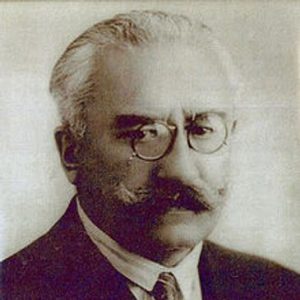
Alexandru Vaida-Voevod is one of the most prominent figures in 20th-century Romanian history, known for his essential contributions to the Great Union and the consolidation of the Romanian nation state. A politician, diplomat, and lawyer, Vaida-Voevod was a leader of the Romanian national movement in Transylvania and an architect of the province’s integration into the Kingdom of Romania. His political and diplomatic activity was marked by a deep commitment to national values and a desire to contribute to the unity and prosperity of the Romanian people.
Alexandru Vaida-Voevod lived during a period of great political and social change in Central and Eastern Europe, marked by the collapse of the Austro-Hungarian Empire and the reconfiguration of the region’s political map after World War I. During this period, Transylvania, inhabited mainly by Romanians, was under Austro-Hungarian rule, and the Transylvanian Romanians were subjected to a policy of Magyarization and discrimination.
In this context, the Romanian national movement in Transylvania fought for national rights and union with Romania. Alexandru Vaida-Voevod was one of the prominent leaders of this movement, playing an essential role in the negotiations that led to the union of Transylvania with Romania on December 1, 1918.
Alexandru Vaida-Voevod was born on February 27, 1872, in Olpreț (now Bobâlna), Cluj County, into a family of minor Romanian nobles. His father, Ioan Vaida, was a small landowner, and his mother, Ecaterina Vaida, came from a family of priests. From an early age, Vaida-Voevod was educated in the spirit of national values and was encouraged to continue his studies so that he could contribute to the national emancipation of Romanians in Transylvania.
He attended secondary school at the Piarist High School in Cluj, then enrolled in the Faculty of Medicine at the University of Vienna, graduating in 1896. After completing his medical studies, Vaida-Voevod obtained his doctorate in medicine, but at the same time he became actively involved in the political and national life of the Romanians in Transylvania. In Vienna, he came into contact with Romanian political circles and began to build a political career.
Alexandru Vaida-Voevod had an impressive political and diplomatic career, marked by a series of significant achievements that had a lasting impact on Romanian history. Among his most important contributions are:
Alexandru Vaida-Voevod’s political and diplomatic thinking was marked by a deep commitment to national values and a desire to contribute to the unity and prosperity of Romanians. He was a supporter of the national rights of Romanians in Transylvania and their union with Romania, believing that only through national unity could Romanians achieve freedom and prosperity.
In his political and diplomatic work, Vaida-Voevod promoted the idea that Romania should be a unitary national state, based on the principles of democracy and respect for the rights of all citizens. He was also a supporter of social and economic reforms, believing that Romania’s modernization depended on the implementation of policies that would ensure social justice and economic development.
Among his fundamental works are speeches and articles published in various political and cultural magazines, which reflect his vision of Romania’s role in Europe and the importance of national unity. Vaida-Voevod also published several memoirs and historical works in which he recounted his political and diplomatic experiences and reflected on Romania’s evolution during the interwar period.
Alexandru Vaida-Voevod applied for admission to Freemasonry in early 1919, requesting to be initiated into the Ernest Renan intellectual lodge in Paris. He was interviewed on July 7, 1919, and his initiation took place on August 4, 1919, when he was accepted as an apprentice in that lodge. Shortly thereafter, on September 20, 1919, Vaida-Voevod participated as a special guest in the closing session of the annual convention of the Grand Orient de France, thus consolidating his position within that organization. As a member of the Grand Orient, Vaida-Voevod had the opportunity to negotiate directly with international leaders such as Georges Clemenceau and David Lloyd George, who were also members of Freemasonry, thus facilitating the handling of Romania’s interests in a favorable context.
On June 21, 1923, Vaida-Voevod was elected Emeritus Member of the Sovereign Sanctuary of Romania, after already receiving the 33rd degree, the highest degree in the Ancient and Accepted Scottish Rite. In 1928, he was elected Deputy Grand Orator, thus consolidating his influence and position within Romanian Freemasonry. His role in Freemasonry was essential in harmonizing Romania’s interests with those of the Allies in the post-war period, contributing significantly to Romania’s favorable position in Central and Eastern Europe.
Alexandru Vaida-Voevod died on March 19, 1950, at the age of 78, leaving behind a valuable political and diplomatic legacy. His contributions to the achievement of the Great Union and the consolidation of the Romanian national state had a profound impact on Romania’s political and social evolution and are recognized as essential to the formation of modern Romania.
His legacy is honored by numerous educational institutions, streets, and monuments bearing his name. Alexandru Vaida-Voevod is also commemorated as a hero of the Great Union and as a leader who fought for the rights and freedoms of Romanians. He remains one of the most important figures in Romanian political history, and his legacy continues to inspire generations of Romanians.
Alexandru Vaida-Voevod remains a central figure in Romanian history, a politician and diplomat who contributed decisively to the achievement of the Great Union and the consolidation of the Romanian national state. Through his political and diplomatic activity, Vaida-Voevod laid the foundations of modern Romania and became a symbol of national unity and commitment to democratic values. His political and diplomatic legacy remains invaluable, and his impact on Romania’s evolution is lasting and significant.
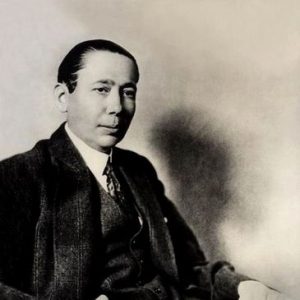
Nicolae Titulescu is considered one of Romania’s greatest diplomats and a leading figure on the international stage during the interwar period. With a distinguished career in diplomacy and politics, Titulescu was a fervent advocate of peace, international cooperation, and collective security. Throughout his life, Titulescu represented Romania on the international stage with remarkable professionalism and diplomatic skill, contributing decisively to Romania’s favorable positioning in the complex geopolitical context of interwar Europe.
Nicolae Titulescu lived and worked during a period of great political and social change in Europe, marked by the aftermath of World War I, the rise of totalitarian regimes, and the turmoil that foreshadowed the outbreak of World War II. In this era of instability, diplomacy became an essential tool for maintaining peace and navigating the political complexities of the time.
Romania, recently unified after the Great Union of 1918, needed a foreign policy that would ensure its security and protect its territorial integrity. In this context, Nicolae Titulescu was the central figure who succeeded in articulating and implementing an effective diplomatic strategy that placed Romania at the center of international alliances and promoted national interests on the world stage.
Nicolae Titulescu was born on March 4, 1882, in Craiova, into a family of intellectuals. His father, Ion Titulescu, was a lawyer and university professor, and his mother, Maria Urdăreanu, came from a family of Oltenian boyars. From an early age, Titulescu was influenced by the intellectual environment in which he grew up, being guided toward an academic and political career.
He attended middle school and high school in Craiova, then enrolled in the Faculty of Law at the University of Paris, where he obtained his doctorate in law with a thesis entitled “On acquisitive prescription.” His studies in Paris provided him with a solid background in law and diplomacy, as well as a broad perspective on the international issues of the time. After completing his studies, Titulescu returned to Romania, where he began his career as a lawyer and university professor, but also as a politician, becoming actively involved in the public life of the country.
Nicolae Titulescu had an impressive diplomatic and political career, marked by significant achievements that had a lasting impact on Romania’s position on the international stage. Among his most important contributions are:
Nicolae Titulescu’s political and diplomatic thinking was marked by a deep commitment to the values of peace, international cooperation, and collective security. He was a proponent of multilateralism and believed that only through collaboration and mutual respect could nations ensure global peace and stability.
Titulescu promoted the idea that Romania should be an active player on the international stage, capable of protecting its national interests and contributing to the construction of an international system based on justice and respect for human rights. In his writings, Titulescu addressed topics such as international law, collective security, and the role of diplomacy in conflict prevention. His fundamental works include articles and speeches published in various international magazines and journals, which reflect his vision of Romania’s role in the world and the importance of international cooperation.
Nicolae Titulescu, Romanian diplomat and politician, was initiated into Freemasonry at the Parisian lodge “L’Union.” Titulescu was an active Freemason, playing an important role in promoting the ideas of international cooperation and peace, fundamental values of Freemasonry.
Nicolae Titulescu died on March 17, 1941, in exile in Cannes, France, at the age of 59. His death occurred in a difficult political context, marked by the growing influence of totalitarian regimes in Europe and the outbreak of World War II. Nevertheless, his diplomatic and intellectual legacy remains one of great value for Romania and the international community.
His contributions to Romanian foreign policy and to the promotion of peace and collective security are recognised as having been essential to Romania’s favourable position in the interwar period. His legacy is honoured by numerous educational institutions, streets and monuments bearing his name. Nicolae Titulescu is also commemorated as a world-renowned diplomat and promoter of international values. He remains one of the most important figures in the history of Romanian diplomacy, and his legacy continues to inspire generations of diplomats and politicians.
Nicolae Titulescu remains a central figure in Romanian history and international diplomacy, a world-renowned diplomat who contributed decisively to building an effective foreign policy and promoting peace and international cooperation. Through his diplomatic and intellectual work, Titulescu laid the foundations for a modern Romanian foreign policy and became a symbol of commitment to the values of peace and international justice. His diplomatic and intellectual legacy remains invaluable, and his impact on the evolution of Romania and world diplomacy is lasting and significant.
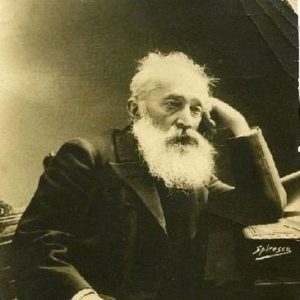
Bogdan Petriceicu Hașdeu, one of the most complex and influential personalities in the history of Romanian culture, was a true Renaissance man in the Romanian space. A writer, philologist, historian, linguist, folklorist, politician, and encyclopedist, Hașdeu left behind an unparalleled cultural and intellectual legacy, contributing decisively to the development of Romanian philology and the consolidation of national consciousness. With his vast culture and brilliant intelligence, Hașdeu was a pioneer in many fields of science and culture, becoming one of the emblematic figures of modern Romania.
Bogdan Petriceicu Hașdeu lived during a period of great turmoil and transformation in Romania, marked by the struggle for national unity and efforts to modernize the Romanian state. Born in the first half of the 19th century, at a time when the Romanian Principalities were beginning to consolidate their national identity and aspire to independence, Hașdeu was a witness to and active participant in the events that shaped Romania’s modern history.
His period of activity coincided with the 1848 Revolution, the Union of the Principalities in 1859, the War of Independence in 1877-1878, and the formation of the Romanian national state. In this context, Hașdeu was a fervent supporter of national ideas and a promoter of Romanian culture, contributing to the development of a strong national identity and the promotion of the cultural and scientific values of the Romanian people.
Bogdan Petriceicu Hașdeu was born on February 26, 1838, in Cristinești, Bessarabia, then part of the Russian Empire. Coming from a noble family of Moldovan origin, Hașdeu was exposed from childhood to a select education, which allowed him to develop his passion for science and culture. His father, Alexandru Hâjdeu, was a remarkable intellectual, philologist, and writer, who profoundly influenced the young Bogdan’s upbringing.
Hașdeu began his studies in Bessarabia, later continuing them at the University of Kharkiv, where he studied law, history, and philology. From an early age, he showed a deep interest in Romanian history and language, as well as other fields such as literature, philosophy, and linguistics. His university studies provided him with a solid education and paved the way for a brilliant career in the humanities.
After completing his studies, Hașdeu settled in Romania, where he began his literary and scientific career, quickly becoming one of the most important figures in Romanian culture. He was a true polymath, publishing seminal works in various fields, from linguistics and history to literature and folklore.
Bogdan Petriceicu Hașdeu had an impressive career, marked by remarkable achievements in multiple fields of culture and science. Among his most important contributions are:
Bogdan Petriceicu Hașdeu’s thinking was characterised by an encyclopaedic vision and a tireless thirst for knowledge. He was a proponent of rationalism and science, but also a fervent supporter of Romanian national and cultural values. Hașdeu strongly believed in the importance of education and culture for the development of a nation and considered that scientific research should be the foundation of any cultural and political action.
His vast and diverse work reflects his interest in language, history, folklore, and literature. Hașdeu was one of the first Romanian intellectuals to attempt to integrate Romanian culture into the context of European culture, exploring the links between Romanian mythology and the mythologies of other peoples, between Romanian history and universal history.
One of his most important works is Etymologicum Magnum Romaniae, an etymological dictionary of the Romanian language, which remains an important reference point in linguistic studies to this day. Istoria critică a românilor (A Critical History of the Romanians) is also a fundamental work for understanding national history, offering a critical and well-documented perspective on the past of the Romanian people.
Hasdeu was also a pioneer in folklore studies, fascinated by the richness and diversity of Romanian folk traditions. In his work “Cuvinte den bătrâni” (Words of the Elders), he attempted to collect and systematize proverbs and popular expressions, considering them an authentic expression of national wisdom and identity.
Bogdan-Petriceicu Hașdeu was initiated into Freemasonry in a Lodge in Bucharest, being an active and influential Freemason. He supported Enlightenment and progressive ideas in his philological and historical research, as well as in his journalistic work. Freemasonry was a platform through which he promoted education and national culture. The following words, which belong to him, can be considered relevant to his membership in the Order: “What is Romanianism? For us, it is the first condition for loving Humanity. For us, it is the first condition for loving Freedom. For us, it is the first condition for us to be able to love Truth. Romanianism is Humanity, Freedom, and Truth.”
Bogdan Petriceicu Hașdeu died on August 25, 1907, at the age of 69, leaving behind a cultural and intellectual legacy of inestimable value. His contributions to the development of Romanian philology, history, folklore, and culture had a profound impact on Romania’s cultural evolution and inspired entire generations of researchers and intellectuals.
His legacy is honored by numerous educational institutions, streets, libraries, and museums that bear his name. The Iulia Hașdeu Castle in Câmpina, built by Hașdeu in memory of his daughter, has become a museum dedicated to his life and work, a place of pilgrimage for those who wish to learn more about the personality and contributions of this great man of culture.
His works continue to be studied and appreciated by researchers and specialists in various fields, and his oeuvre remains an essential reference point for understanding Romanian culture and history.
Hașdeu is recognized as an encyclopedic genius of Romanian culture, a visionary who contributed decisively to the formation of national identity and the development of science and culture in Romania. He remains one of the most important figures in Romania’s intellectual history, and his legacy continues to inspire and guide today’s generations.
Bogdan Petriceicu Hașdeu remains one of the most complex and influential figures in Romanian culture, a scientist, writer, and encyclopedist who left a lasting legacy in many fields. Through his vast and diverse work, Hașdeu made a decisive contribution to the development of Romanian culture and national identity, being a pioneer of Romanian philology, history, and folklore. His cultural and intellectual legacy remains unmatched, and his impact on Romania’s cultural evolution is lasting and significant.
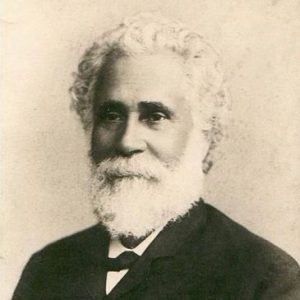
Ion C. Brătianu, one of the most influential political figures in Romania’s modern history, played a central role in the formation and consolidation of the modern Romanian state. As leader of the National Liberal Party and Prime Minister of Romania on several occasions, Brătianu was an active promoter of democratic reforms and the modernization of state institutions. Throughout his career, he contributed decisively to the Union of the Principalities, the achievement of Romania’s independence, and the proclamation of the Kingdom of Romania, becoming one of the founding fathers of modern Romania.
Ion C. Brătianu lived during a crucial period in Romanian history, marked by major political and social transformations. Starting in the first half of the 19th century, the Romanian Principalities underwent a period of national rebirth, fueled by the ideas of the 1848 Revolution and the desire for union and independence from the Ottoman Empire.
The era in which Brătianu carried out his political activity was characterized by efforts to modernize the state and integrate Romania into the European system of states. The years following the Revolution of 1848 were crucial for the unification of the Romanian Principalities under Alexandru Ioan Cuza in 1859, and then for gaining independence from the Ottoman Empire following the War of Independence in 1877-1878.
In this context, Ion C. Brătianu was one of the most important political leaders who contributed to the achievement of these objectives. As leader of the National Liberal Party, he promoted ideas of political and economic reform, democratization, and modernization of state institutions, becoming a true architect of modern Romania.
Ion C. Brătianu was born on June 2, 1821, in Pitești, into a family of boyars. His father, Constantin Brătianu, was a boyar with liberal views, and his mother, Anastasia, came from a family with cultural traditions. From an early age, Brătianu was influenced by his family environment, which instilled in him the values of patriotism and liberalism.
He attended primary school in Pitești, after which he moved to Bucharest to continue his education at the “Sfântul Sava” College, the most prestigious educational institution in the capital. Here he was a classmate of many of the future leaders of the revolutionary movement of 1848, including C.A. Rosetti, who would become a trusted political ally.
After graduating from college, Brătianu went to Paris, where he studied engineering at the École Centrale des Arts et Manufactures. His studies in the French capital allowed him to come into contact with the revolutionary ideas and democratic values promoted by the French Revolution, which had a profound impact on his political formation.
Ion C. Brătianu began his political career in the period leading up to the 1848 Revolution, when he joined the liberal movement in Wallachia. He was one of the leaders of the revolution, actively participating in the drafting and promulgation of the Proclamation of Islaz, a document that called for political and social reforms, such as the abolition of boyar privileges and the liberation of peasants from serfdom. Although the revolution was defeated, Brătianu continued to campaign for reform and national unity.
After the defeat of the revolution, Brătianu was exiled to France, where he continued to support the Romanian cause. He returned to the country in 1857, on the occasion of the Ad Hoc Assemblies that prepared the Union of the Principalities. During this period, Brătianu became one of the most influential supporters of the Union and played a decisive role in the election of Alexandru Ioan Cuza as ruler of Moldavia and Wallachia in 1859.
As Prime Minister of Romania for several terms between 1868 and 1888, Brătianu was the architect of major reforms that modernized the Romanian state. Among his notable achievements were the adoption of the 1866 Constitution, which was one of the most liberal constitutions in Europe at the time, and the implementation of agrarian reform that led to the enfranchisement of peasants.
One of Brătianu’s greatest achievements was leading Romania during the War of Independence in 1877–1878. As prime minister, Brătianu played a crucial role in gaining international support for Romania’s cause and in organizing the war effort. After defeating the Ottoman Empire, Romania gained its independence, which was recognized by the Treaty of Berlin in 1878. In 1881, Brătianu contributed to the proclamation of the Kingdom of Romania, with Carol I as king, thus consolidating Romania’s international status.
Ion C. Brătianu was a fervent supporter of liberalism, believing in the need to modernize the Romanian state through political and economic reforms. His ideas were deeply influenced by French liberalism, which he became familiar with during his studies in Paris.
As leader of the National Liberal Party, Brătianu promoted a series of policies aimed at democratising political life in Romania and stimulating economic development. The 1866 Constitution, inspired by European liberal constitutions, was one of his most important achievements, establishing the fundamental principles of the modern Romanian state, including national sovereignty, separation of powers, and civil rights and freedoms.
Brătianu was also a supporter of agrarian reform, believing that Romania’s economic development depended on freeing peasants from the domination of the boyars and granting them land ownership. The agrarian reform of 1864, promoted by Cuza but also supported by Brătianu, was an important step in this direction, although it was followed by other reforms to complete the process.
Internationally, Brătianu was a skilled diplomat, managing to obtain recognition of Romania’s independence and integrate the country into the European alliance system. His foreign policy was characterized by balance and pragmatism, aimed at ensuring Romania’s security and sovereignty in a complex international context.
Ion C. Brătianu a fost inițiat în francmasonerie în anul 1846, în Loja „Ateneul Străinilor” din Paris. Ulterior, s-a afiliat Lojii „Trandafirul Perfectei Tăceri”, unde a primit gradul de Maestru în 1847. După întoarcerea în țară, a devenit membru al Lojii „Frăția” din București, jucând un rol central în mișcarea pentru Unirea Principatelor și în dezvoltarea României moderne. De asemenea, a fost membru fondator al Lojii „Steaua Dunării” din București, în anul 1857. Francmasoneria i-a influențat profund viziunea politică și angajamentul față de cauza națională.
Ion C. Brătianu died on May 16, 1891, at the age of 70, leaving behind an impressive political and national legacy. Considered one of the founding fathers of modern Romania, Brătianu was posthumously honored with numerous monuments, institutions, and streets bearing his name.
The Brătianu family continued to play an important role in Romanian political life, with his sons, Ion I.C. Brătianu and Dinu Brătianu, becoming important leaders of the National Liberal Party and the Romanian state.
Brătianu’s legacy is now recognized as essential to the formation of modern Romania. His reforms and political vision contributed to the building of a democratic and sovereign state, and his influence continues to be studied and appreciated by historians and political scientists.
Ion C. Brătianu was a true architect of modern Romania, an exceptional political leader who contributed to the achievement of the most important national objectives of the 19th century: the union, independence, and modernization of Romania. Through his political activity and the reforms he promoted, Brătianu left an indelible mark on Romanian history, and his legacy continues to inspire and guide Romania’s democratic development.
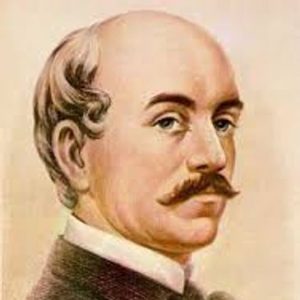
Vasile Alecsandri, one of the most prominent figures in 19th-century Romanian literature and culture, was a true promoter of national identity. Known as a poet, playwright, diplomat, and politician, Alecsandri played a crucial role in the national revival movement and in the process of unifying the Romanian Principalities. Through his literary works and political activity, Alecsandri contributed to the consolidation of the Romanian literary language and the propagation of national values, becoming an essential voice in the effort to modernize and emancipate Romania.
Vasile Alecsandri lived during a period of profound political and social change, when Enlightenment and Romantic ideas were beginning to penetrate Romanian society, stimulating the development of national consciousness. The 19th century was marked by the struggle for independence and national unity, events that culminated in the Revolution of 1848 and the Union of the Romanian Principalities in 1859.
In this context, Alecsandri became actively involved in the 1848 revolution, supporting revolutionary ideals through his words and actions. He was also one of the ardent supporters of the union of Moldavia with Wallachia, seeing in this act an opportunity to create a modern and powerful Romanian state. His political and diplomatic activity, combined with his literary talent, made him a central figure in Romanian culture at that time.
Vasile Alecsandri was born on July 21, 1821, in Mircești, into a family of Moldavian boyars. His father, Vasile Alecsandri senior, was an influential boyar, and his mother, Elena Cozoni, came from a noble family with Greek roots. His childhood was marked by the education he received in the Moldavian aristocratic milieu, which gave him access to a select education and a refined cultural circle.
Alecsandri studied at Victor Cuenim’s boarding school in Iași, where he learned French and came into contact with Western literature. In 1834, he left for Paris to continue his studies, attending courses in medicine, law, and engineering, although he did not complete any degree. His Parisian experience broadened his cultural horizons and instilled in him a deep passion for literature, theater, and music, influences that would later be reflected in his works.
Upon returning to Moldova, Alecsandri began his literary and political career. In 1840, together with Mihail Kogălniceanu and other young intellectuals, he founded the magazine Dacia literară, considered a turning point in Romanian literature through its promotion of national spirit and original literature. Alecsandri published his first poems and stories in the pages of this magazine, quickly distinguishing himself as one of the most talented young writers of the era.
In 1848, Alecsandri participated in the Moldavian Revolution, drafting the “Proclamation of Iași” and becoming actively involved in the revolutionary movement. Although the revolution was defeated and Alecsandri was forced to take refuge for a time in Transylvania and France, this experience strengthened his patriotic convictions and inspired many of his later literary works.
Alecsandri’s best-known contribution to Romanian literature is his collection of folk poems, Poezii poporale. Balade (Cântece bătrânești) (Folk Poems. Ballads (Old Songs)), published in 1852. This work had a profound impact on Romanian literature, contributing to the development of a national literary identity and the appreciation of Romanian folklore. Alecsandri continued to write and publish poetry, plays, and prose, becoming one of the most important Romanian writers of his time.
In addition to his literary work, Alecsandri also had a remarkable political career. In 1859, he was one of the leading supporters of the Union of the Romanian Principalities, playing an essential role in promoting and supporting Alexandru Ioan Cuza as ruler of Moldavia and Wallachia. He was later appointed Minister of Foreign Affairs and represented Romania in various diplomatic missions, contributing to the international recognition of the Romanian state.
Vasile Alecsandri’s work is vast and diverse, including poetry, plays, prose, and political writings. As a poet, Alecsandri was a leading representative of Romanian Romanticism, with clear influences from folk literature and French poetry. His best-known poems, such as “Miorița,” “Pastelurile,” and “Doinele,” are characterized by a deep sense of nationalism and a sensitive evocation of Romanian landscapes and traditions.
In the field of theater, Alecsandri was a pioneer of Romanian dramaturgy, writing comedies and dramas inspired by the social and political life of the time. Plays such as “Chirița în provincie” (Chirița in the Province) and
“Sânziana and Pepelea” were extremely popular at the time and continue to be performed on Romanian stages today, thanks to their humor and lively characters.
Beyond his literary work, Alecsandri’s thinking was deeply influenced by the ideals of the 1848 Revolution and his desire to contribute to the modernization of Romania. His political writings, articles, and speeches were always geared toward promoting national unity, freedom, and social progress.
Vasile Alecsandri was initiated into Freemasonry in 1857, in a Masonic lodge in Iași. His Masonic activity was closely linked to the promotion of ideas of national unity and the modernization of Romanian society. Although not many details are available about his involvement in the lodge, it is known that Alecsandri used Masonic networks to support cultural and political causes that contributed to the formation of national identity.
Vasile Alecsandri’s legacy is profound and enduring, as he is recognized as one of the founders of modern Romanian literature and a promoter of national values. After his death on August 22, 1890, Alecsandri was honored with numerous monuments, streets, and institutions bearing his name.
In 1948, he was posthumously elected a member of the Romanian Academy, in recognition of his fundamental contribution to Romanian culture. His work continues to be studied and appreciated, both for its literary value and for its importance in strengthening Romanian national identity.
Vasile Alecsandri remains an emblematic figure of Romanian culture and literature, a model of patriotism and dedication to the national cause. Through his writings, he contributed to the formation of national consciousness and the promotion of Romanian values, and through his political and diplomatic activity, he played a crucial role in asserting Romania’s presence on the international stage. His literary and cultural legacy is today a pillar of national identity, and his name is synonymous with the struggle for unity and freedom.
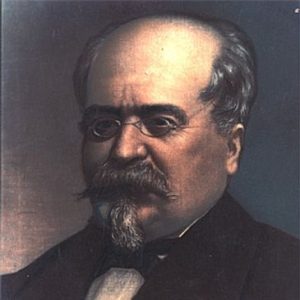
Mihail Kogălniceanu is one of the most important and influential figures in 19th-century Romania. A politician, diplomat, historian, writer, and lawyer, Kogălniceanu was a visionary who contributed decisively to the modernization of Romania and the unification of the Romanian Principalities. Considered a founding father of modern Romania, Kogălniceanu was a promoter of social, economic, and political reforms that laid the foundations for a unified and independent Romanian state.
Mihail Kogălniceanu lived during a period of great change in the Romanian Principalities, marked by the rise of national movements and the beginnings of the modernization of the Romanian state. In the mid-19th century, Wallachia and Moldavia were still under the suzerainty of the Ottoman Empire, but had begun to consolidate their national identity and aspire to independence and union.
The era in which Kogălniceanu carried out his political activity was one of cultural and political effervescence, in which the Romanian elites sought to create a framework for the development of a modern and independent nation. In this context, Kogălniceanu established himself as an intellectual and political leader, playing an essential role in the unification of the Principalities and in promoting the reforms necessary for the modernization of the Romanian state.
Mihail Kogălniceanu was born on September 6, 1817, in Iași, into a boyar family of Moldavian origin. His father, Ilie Kogălniceanu, was an influential boyar and supporter of reforms, and his mother, Catinca Stavilă, came from a family of great boyars. From an early age, Kogălniceanu received a select education, being exposed to the liberal and Enlightenment ideas that were circulating in Europe at the time.
He began his studies in Iași, continuing them at the Mihăileană Academy, where he had the opportunity to study with renowned professors and come into contact with the major currents of thought of the time. In 1835, he left to study in France and Germany, where he studied law, philosophy, and history. His studies abroad provided him with a solid intellectual foundation and opened his eyes to the major political and social issues of Europe.
Upon returning to Romania, Kogălniceanu began a brilliant career as a lawyer, professor, and writer, quickly becoming one of the most respected intellectuals of his time. His journalistic work and involvement in political life had a profound impact on Romania’s cultural and political development.
Mihail Kogălniceanu had an impressive political and intellectual career, marked by remarkable achievements that had a lasting impact on the development of modern Romania. Among his most important contributions are:
“The History of the Romanians” (1860), a reference work for the study of national history. Kogălniceanu also published numerous articles, essays, and speeches in which he promoted national ideas and supported the reforms necessary for the modernization of the state.
Mihail Kogălniceanu’s political and intellectual thinking was marked by national ideals and the desire to contribute to the emancipation and modernization of Romania. He was a supporter of liberal and democratic values, believing that only through reforms and education could Romania achieve freedom and prosperity.
In his journalistic and political work, Kogălniceanu promoted the idea that the Romanian state should be based on democratic principles and respect for the rights of all citizens. He was a supporter of agrarian reform, economic development, and the modernization of state institutions, considering these measures essential for strengthening the national state and ensuring the well-being of citizens.
Among his fundamental works are “Letopisețul Țării Moldovei” (The Chronicle of the Land of Moldova), a historical reference work for understanding Moldova’s past, and “Istoria românilor” (The History of the Romanians), a comprehensive work that offers a perspective on the historical evolution of the Romanians. His speeches and articles published in various political and cultural magazines also reflect his concerns for the modernization of the state and the promotion of national interests.
According to I.T. Ulic’s account in his 1932 work Istoria Francmasoneriei (The History of Freemasonry), Mihail Kogălniceanu was elected Worshipful Master of a Bucharest Lodge in 1844. Freemasonry played an essential role in shaping his political vision and public actions, which can be easily observed by following his historical path.
Mihail Kogălniceanu died on June 20, 1891, at the age of 73, leaving behind a political, intellectual, and cultural legacy of inestimable value. His contributions to the unification of the Romanian Principalities, the modernization of the state, and the development of Romanian culture and education had a profound impact on Romania’s evolution and are recognized as essential to the formation of the modern Romanian state.
His legacy is honored by numerous educational institutions, streets, and monuments bearing his name. His works continue to be studied and appreciated by historians, political scientists, and researchers, and are recognized as fundamental to understanding Romania’s historical and cultural evolution.
Mihail Kogălniceanu is considered one of the greatest statesmen in Romanian history, a visionary who contributed decisively to the construction of a modern, united, and independent Romania. He remains one of the most important figures in Romanian political and cultural history, and his legacy continues to inspire generations of Romanians.
Mihail Kogălniceanu remains a central figure in Romanian history, a visionary politician and intellectual who contributed decisively to the unification of the Romanian Principalities and the modernization of the Romanian state. Through his political and journalistic work, Kogălniceanu laid the foundations for a modern and independent Romania, and his political and cultural legacy remains invaluable. His impact on Romania’s evolution is lasting and significant, and his figure continues to inspire and guide today’s generations.
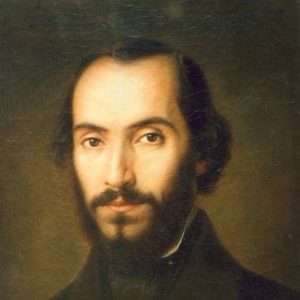
Nicolae Bălcescu, one of the most influential figures of the 19th century in Romania, is known as a historian, revolutionary, and fervent supporter of the national ideal of uniting all Romanians. His figure is closely linked to the revolutionary movement of 1848 and to the efforts of modernization and national emancipation. Through his historical works and political activity, Bălcescu contributed decisively to the formation of Romanian national consciousness and to the promotion of the ideas of liberty, equality, and fraternity.
Nicolae Bălcescu lived during a period characterized by great political and social turmoil in Europe, marked by the Revolution of 1848, which swept across almost the entire continent. During this period, Enlightenment and Romantic ideas stimulated the development of national consciousness among oppressed peoples, including the Romanians. In the Romanian Principalities, as in other countries, the revolution was fueled by the desire for independence, national unity, and social reform.
In this context, Bălcescu established himself as one of the most active and visionary leaders of the 1848 revolution in Wallachia. The 1848 revolution, which aimed to liberate the country from Ottoman rule and establish a democratic regime, was a turning point in Romanian history, even though it was ultimately defeated. Nevertheless, the ideas and ideals promoted by Bălcescu and the other revolutionaries remained alive and contributed to the Union of the Romanian Principalities in 1859 and the creation of the modern Romanian state.
Nicolae Bălcescu was born on June 29, 1819, in Bucharest, into a family of minor boyars. His parents, Barbu Bălcescu and Zinca Petrescu, provided him with a select education, which included primary studies at a boys’ boarding school run by a Greek teacher and then at Sfântul Sava, the most prestigious school in Bucharest at the time.
From a young age, Bălcescu stood out for his brilliant intelligence and profound thirst for knowledge, taking an interest in history, politics, and literature. During his studies, he was influenced by revolutionary ideas and Enlightenment philosophy, which led him to become actively involved in public life.
In 1838, at the age of 19, Bălcescu enlisted in the army, where he began to form ties with young progressive officers who shared the same ideals. Disappointed by the corruption and social inequality in Romanian society, Bălcescu devoted his entire life to the struggle for national and social emancipation.
Nicolae Bălcescu quickly became a central figure in the 1848 revolution, being one of the founders of the secret society Frăția, which aimed to prepare and organize the revolution. In 1843, he was involved in drafting the revolutionaries’ political program, entitled “Draft Constitution,” which promoted the abolition of feudal privileges, agrarian reform, and the union of all Romanians in a single state.
During the Revolution of 1848, Bălcescu was one of the prominent leaders, actively participating in the drafting of the Proclamation of Islaz, a document that formed the basis of the revolution in Wallachia. The Proclamation called for political and social reforms, including the emancipation of peasants, freedom of the press and assembly, and the union of the Romanian principalities.
After the defeat of the revolution, Bălcescu was forced into exile, living in France, Italy, and Hungary. In exile, he continued his political and intellectual activities, collaborating with revolutionaries from other countries and writing historical works of great value.
Nicolae Bălcescu’s most important literary and historical contribution is his work “Românii supt Mihai-Voievod Viteazul” (The Romanians under Mihai Viteazul), published posthumously in 1877. This work, which presents the reign and achievements of Mihai Viteazul, is considered one of the most important Romanian historical works, due to its national vision and elevated style. In this book, Bălcescu expresses his ideal of uniting all Romanians in a single state, seeing Mihai Viteazul as a precursor of this ideal.
In addition to his work as a historian, Bălcescu was a remarkable political theorist. In his writings, he promoted the ideas of democracy, social justice, and national unity, profoundly influencing Romanian political thought in the mid-19th century.
Nicolae Bălcescu’s thinking was shaped by the ideas of the Enlightenment and the values of the French Revolution, which he adapted to the Romanian context. His central political ideal was the union of all Romanians in a single, democratic, and sovereign nation state. This vision underpinned all his political actions and historical works.
In his historical work, Bălcescu attempted to demonstrate the historical legitimacy of this ideal, showing that Romanians have always had a national consciousness and fought for unity and independence. His work on Mihai Viteazul is an eloquent example in this regard, where the national hero is presented not only as a great military leader, but also as a symbol of national unity.
On a social level, Bălcescu was a supporter of agrarian reform, believing that the liberation of peasants and the equitable distribution of land were essential for the development of a democratic and prosperous society. He also promoted the idea of universal education as a means of social and cultural emancipation.
His political and historical writings had a major impact on subsequent generations of Romanian politicians and intellectuals, serving as sources of inspiration for the national liberation movements of the second half of the 19th century.
Nicolae Bălcescu was initiated into Freemasonry at the Athenée des étrangers Lodge in Paris in the years leading up to the 1848 Revolution, according to The Masonic Philatelist magazine (1988, New York). In 1847, Bălcescu became Worshipful Master of the “Frăția” Lodge in Bucharest, according to I.T. Ulic’s account in his 1932 book Istoria Francmasoneriei (History of Freemasonry) and articles published in the magazine Paza (1930). This lodge played a crucial role in the preparation and unfolding of the revolution. Freemasonry was essential in shaping his revolutionary and democratic ideas, and Bălcescu used the organization to mobilize support for major social and political changes in the Romanian Principalities.
Nicolae Bălcescu died on November 29, 1852, at the age of only 33, in Palermo, Italy, succumbing to tuberculosis. His early death was a huge loss for the Romanian national movement, but his ideals and work continued to inspire future generations.
Posthumously, Bălcescu was recognized as one of the great heroes of the Romanian nation, being honored with monuments, streets, and institutions bearing his name. In 1866, when Romania’s first constitution was drafted, his ideas on democracy and social reform were considered sources of inspiration.
Today, Nicolae Bălcescu is revered not only as a great historian and revolutionary, but also as a visionary of national unity, a man who dedicated everything to the good of his nation. His work and ideals continue to be studied and respected, constituting a fundamental pillar of Romanian historiography and political culture.
Nicolae Bălcescu remains one of the most important figures in Romanian history, a man who dedicated his entire life to the struggle for freedom, unity, and social justice. Through his historical writings and revolutionary activity, Bălcescu contributed to the formation and consolidation of Romanian national consciousness, leaving behind a lasting legacy that continues to inspire today’s generations.
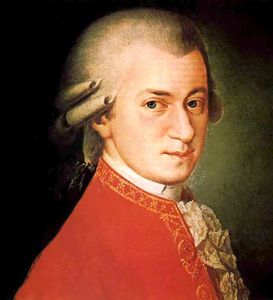
Austrian composer. Author of over 600 musical works. His father, Leopold Mozart, a talented musician and composer, gave him a refined musical education from early childhood, so that young Amadeus performed before European princes from the age of 6 (Munich and Vienna), 7 (Mannheim, Paris), 8 (London), 13-14 (Milan, Florence, Rome). In 1782, he married Constanze Weber, the great love of his youth. Intense musical activity, laborious work, and the intrigues of the time apparently destroyed his health, so he died at age 35. Initiated on December 14, 1784, in the Lodge “Zur Wohltätigkeit” (“Beneficence”) in the Orient of Vienna, which later merged with the Lodge “Zur Neugekrönten Hoffnung” (“New Crowned Hope”). After 3 months of Masonic activity, he invited his father to visit the Lodge he belonged to. Mozart the son later participated, as a Brother, in the Masonic reception of Leopold Mozart, his father, conductor of the Royal Court Orchestra and author of the famous “Toy Symphony”. Haydn’s initiation into Freemasonry was also due to Mozart.
Influenced by the activity of the Lodges, he composed a first Masonic musical piece as early as 1772, when he was only 16 years old. Wolfgang Amadeus Mozart regularly attended the meetings (Ținutele) of the Lodge “Zur Wahren Eintracht” (“True Concord”), whose Worshipful Master was Ignatius von Born, a close advisor to Emperor Joseph II, who inspired the character Sarastro in “Die Zauberflöte” (“The Magic Flute”), an opera written according to Masonic ritual in 1791 and constituting Mozart’s “response” to the banning of Austrian Masonry in the same year by Emperor Leopold II. He also wrote Masonic funeral music, cantatas, and Lieder. After his passing to the Eternal East, all the works of Masonic character he wrote were published in one volume. Evelyne Hurard, who provides a laborious presentation in the Dictionary of Freemasonry, states: “Mozart demonstrates to us that he gave his life unity and found a happy synthesis between his social ideas of liberty, equality, and his spiritual convictions of fraternity and love.” Christian Jacq holds the following opinions about Mozart’s Masonic activity: “While Voltaire’s initiation was a final quip, Mozart’s was the sign of a deep spiritual commitment, the traces of which are easily discernible in the great composer’s work. Not to mention the concertos, sonatas, symphonies, in which this still very young man manifested an exceptional depth of thought, one notes the influence of Masonic symbolism in the Masonic cantatas and songs intended for the Lodges; these little-known works are admirable and reach a level comparable to the great Masonic opera The Magic Flute, largely inspired by von Born, one of the most erudite Worshipful Masters of his time.” A. Nataf considers him “the greatest and most famous Freemason musician, sometimes even dedicating his masterpieces to Freemasonry (…), and his brilliant opera The Magic Flute would not have seen the light of day if the librettist and Brother Mason Emmanuel Schikaneder had not commissioned it from a Mozart then forgotten by fortune (…). It was not Masonry that created Mozart. On the contrary, without Mozart, Masonry would have lost something of its being. It gave the artist the theme that crystallized his inspiration.”
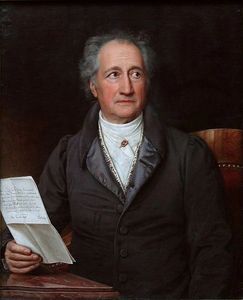
German poet, writer, thinker, and scientist. His scientific work and his ethical and aesthetic thought hold a prominent place in the history of progressive thinking. J.G. Herder (also a Mason) had a strong influence on his intellectual formation. From 1775, he settled at the Court of Weimar, where he served as a chief minister. An exponent of the “Sturm und Drang” movement. His main works analyze the dialectic of nature (“Zur Farbenlehre” – “Theory of Colours”, “Zur Naturwissenschaft überhaupt, besonders zur Morphologie” – “On Natural Science in General, Especially Morphology”, “Versuch die Metamorphose der Pflanzen zu erklären” – “Attempt to Explain the Metamorphosis of Plants”), the revolt of the man of genius against social laws and divinity (“Prometheus”), sentimental life (“Die Leiden des jungen Werthers” – “The Sorrows of Young Werther”), the evolution of the process of personality formation (“Wilhelm Meisters Lehrjahre” – “Wilhelm Meister’s Apprenticeship”). The dramatic poem “Faust” (1808) is considered the synthesis of his creation and one of the representative works of humanity, illustrating the struggle of the main hero constantly in a tragic search for truth. Goethe’s genius is also evident in other poems (“Römische Elegien” – “Roman Elegies”, “Hermann und Dorothea”), novels (“Die Wahlverwandtschaften” – “Elective Affinities”), dramas (“Iphigenie auf Tauris” – “Iphigenia in Tauris”, “Egmont”, “Torquato Tasso”), which highlight the uniqueness and versatility of his personality.
He was initiated as a Freemason on June 23, 1780, in the Lodge “Amalia zu den drei Rosen” (“Amalia of the Three Roses”) in Weimar. The Lodge in Frankfurt, to which the father of his beloved – Lili Schönemann – belonged, had already wanted to receive him among its members. In his autobiography “Dichtung und Wahrheit” (“Poetry and Truth”), Goethe later wrote: “The Masonic lodge in Frankfurt, respectable and solidly founded, whose most influential members I knew thanks to my connection with Lili, discreetly invited me to join it. But, out of a sense of independence which later seemed madness to me, I did not accept this idea.” On June 24, 1781, he became a Fellowcraft, and on March 2, 1782, a Master Mason. Initiation into Freemasonry allowed him to become himself, as he himself expressed it. On February 11, 1783, he joined the Order of the Illuminati, whose ideals – wisdom, strength, beauty – were also Masonic. Daniel Beresniak is of the opinion that “the symbolic mode of approach practiced by Freemasonry is visible throughout Goethe’s work.” He wrote a series of poems inspired by Lodge life, collected in the volumes “Loghe” and “Symbolum”. He also expressed criticism regarding some errors of Freemasonry in his time: “Freemasonry is a state within a state, and introducing it where it does not yet exist is not at all advisable.”
“Licht, mehr Licht!” (“Light, more light!”), are Goethe’s last words, spoken on his deathbed on March 22, 1832. Their meaning is controversial. Some take these words literally. In the final moments of his life, the great German writer, feeling a blurriness, a mist before his eyes, asked for more light. Others, conversely, attribute to this “mehr Licht” the figurative meaning of more culture, more science, more truth. And it is with this latter meaning that Goethe’s famous words are usually quoted.
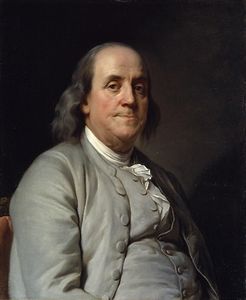
American physicist, philosopher, economist, and statesman. Born into a family [Note: Franklin’s family was Puritan English, not French] with 17 children [Note: Benjamin was the 15th of 17 children], he was self-taught, studying Latin, the fashionable languages of the time (French [not English] and German) and especially the physical sciences on his own. On December 23, 1747 [Note: Experiments leading to it were earlier, proof perhaps later, invention date often cited as 1752] he invented the lightning rod, and on August 22, 1772, he became a foreign associate of the Paris Academy of Sciences. In 1776, he was one of the drafters of the U.S. Declaration of Independence. In 1778, at Versailles, he was officially recognized by Louis XVI as the United States ambassador. In 1731, he was initiated as a Freemason in St. John’s Lodge in Philadelphia. In 1734, he printed the first American edition of Anderson’s Constitutions of 1723. In the same year, 1734, he became Provincial Grand Master of the Provincial Grand Lodge of Pennsylvania (under the jurisdiction of the Grand Lodge of England), as mentioned in 1760 in the registers of the Grand Lodge of England. An extremely complex personality, he involved himself in community life, creating a fire department, a public hospital, a public library, as well as the University of Pennsylvania. In 1743, he founded the first learned society in the American colonies, the American Philosophical Society. As a physicist, he made numerous contributions to electrostatics, invented bifocal lenses, and the lightning rod. As a Freemason, he considered that Masonic autonomy precedes and accompanies political independence. From 1757, for 17 years, he represented American interests in the British capital. He then presented the cause of the insurgents in France, obtaining financial and military assistance. He is one of the signatories of the Declaration of Independence of July 4, 1776, of the 13 American states, as well as other documents of great importance to the American people. Masonically, his election in May 1779 as Worshipful Master of the famous “Les Neuf Sœurs” Lodge in Paris, of which the illustrious Voltaire had also been a member, should be noted. His term as Worshipful Master (1779-1781) was marked by the importance of meetings (Ținute) with cultural, literary, artistic, and scientific character. At the same time, as Worshipful Master, he encouraged the “Les Neuf Sœurs” Lodge to support the American cause by all means. In 1785, he returned to the United States, and in 1790, he passed away in Philadelphia. His long and important Masonic career stands as a total commitment to the fulfillment of the ideals of the Enlightenment and Freemasonry.
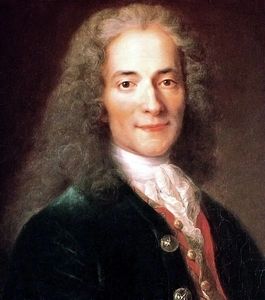
The anagrammatic pseudonym of François-Marie Arouet, an Enlightenment thinker and French writer. He criticized the providential conception [of history], proposing instead the idea of society’s progressive development. He rejected fanaticism, prejudice, privileges, intolerance, and abuses of any kind, recommending the investigation of nature through experimental methods. His main philosophical works were: “Lettres philosophiques” (“Philosophical Letters,” 1734), “Traité sur la tolérance” (“Treatise on Tolerance,” 1763), “Dictionnaire philosophique” (“Philosophical Dictionary,” 1764). Initiated as an Entered Apprentice on April 7, 1778 (he passed to the Eternal East on May 30 of the same year), in the presence of 250 Brethren, members of the Parisian Lodge “Les Neuf Sœurs” (The Nine Sisters). The initiation was conducted to the music of Mozart’s “The Magic Flute”.
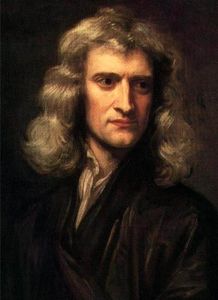
English mathematician, physicist, and astronomer, friend of Reverend John Theophilus Desaguliers (Grand Master of the first Grand Lodge of England between 1719-1720). Member and President of the Royal Society of London [for Improving Natural Knowledge], where he was a colleague of Elias Ashmole. In his most important work, “Philosophiæ Naturalis Principia Mathematica” (“Mathematical Principles of Natural Philosophy”), published in 1687, he laid the foundations of classical mechanics, formulating the law of universal attraction (gravitation). An adherent of the inductive method, he is the author of the famous quip “Hypotheses non fingo” (“I frame no hypotheses”). He established classical mechanics, stating the three laws of motion, made significant contributions to optics (in the study of dispersion and interference phenomena), invented the reflecting telescope (1668), and proposed the corpuscular theory of light; in mathematics, he laid the foundations of infinitesimal calculus, concurrently with Leibniz, and provided the binomial theorem formula that bears his name. After discovering the law of gravity at the age of 25 (in 1667 [Note: The discovery process spanned years, but this likely refers to a key insight period]), he understood that the physical universe is governed by mechanical laws and that these emanated from the Great Architect of the Universe, the creator of the world, God. His conception was later adopted by English Masons. He was also a Rosicrucian Knight.
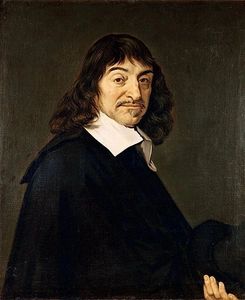
French philosopher and scientist, one of the founders of modern philosophy. Author of the famous thesis “Dubito,ergo cogito; cogito, ergo sum” (“I doubt, therefore I think; I think, therefore I am”), which demonstrates that for him the criterion of truth lies in reason itself, in the evidence, clarity, and distinction of our knowledge. He made epochal discoveries in mathematics and physics, laid the foundations of analytic geometry, was among the first to introduce the notions of variable magnitude and that of function, discovered the law of light refraction, and formulated the law of conservation of momentum.